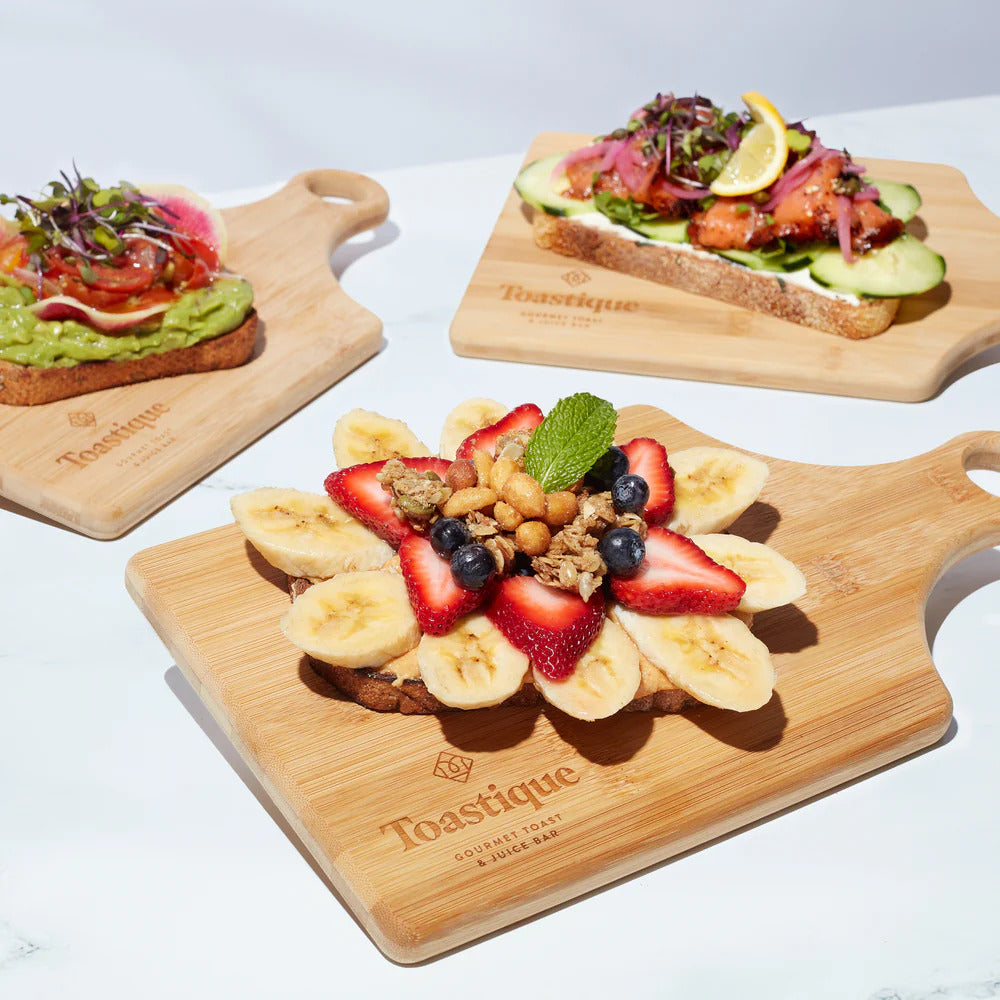
Some mornings are just better when you start with nutritious food. Not complicated food. Not a heavy breakfast that you have to sit with for an hour. Just something that is fresh, looks inviting, and gets your day going on a positive note.
That's kind of the appeal we look for when talking about gourmet toast ideas. It's not trying to be over the top, even though it sounds like it might be. Wholesome bread, healthy toppings, ingredients that actually go together. You eat it, you feel good, and you’re ready to continue with your day! And yeah, most people grab a photo first because it usually looks too good to pass up.
Here are nine Instagram-worthy toasts worth trying. Read on, as there is one here that'll become your new go-to.
What Makes a Toast "Gourmet" Anyway?
Honestly? Fresh ingredients and flavor combinations that work. Gourmet doesn't have to be fancy. It just means someone put effort into making it taste delicious.
Our bread itself matters more than you'd think. Quality bread has structure. It holds up under our fresh toppings without getting soggy. It adds its own flavor rather than just holding the other ingredients. It adds a quality many of our competitors lack.
When it's prepared and toasted right, you get that perfectly inviting contrast, It's the foundation everything else builds on.
Toast is already comforting. Warm, freshly toasted bread works any time of day. It's familiar. Add the right ingredients (fresh produce, something creamy, sometimes a protein, a drizzle), and it becomes more than just toast. It becomes this little moment you look forward to.
The ingredients are where our toasts' personality comes in—craving something savory? The Avocado Smash with everything bagel seasoning or the Tomato Burrata with fresh herbs and a balsamic drizzle hits the spot.
More of a sweet tooth? The PB Crunch layered with strawberries, bananas, and a honey drizzle feels like a healthy dessert for breakfast. Some customers keep it simple: almond butter and honey on multigrain does the job beautifully.
Others want layers, like the 3 Cheese Italian with its combination of ricotta, mozzarella, and parmesan, topped with roasted tomatoes and protein. Each ingredient does something, and every combination tells a different story.
Why People Actually Like Our Gourmet Toasts
Because they are simple, nutritious, and tasty! And you can enjoy our toast any time of the day. They're colorful, vibrant, wholesome, and nutritious. Each of our gourmet toasts has its own vibe. You don't need to overthink it. Just pick what sounds and looks good and go with it.
Want something bright and fresh? We have a toast for that. Craving something fulfilling and inviting? There's one for that, too. Feeling a little adventurous? Try something inviting.
Sometimes you want to sit down and take your time. Other times you need to eat and go. Gourmet toasts work for both. They're substantial enough to feel like a real meal that offers real nutritional benefits.
And let's be honest, they look good. Like really good. The kind of ‘good’ that makes you want to take a photo. There's no shame in that.
The Best Gourmet Toast Ideas on the Menu
Here are nine gourmet toast ideas to try next:
1. Avocado Smash Toast
Fresh avocado on multigrain with watermelon radish, marinated tomatoes, chili oil, microgreens, and sea salt.
Those pink-edged watermelon radishes against bright green avocado? Pure Instagram gold. The chili oil adds a perfect flavor kick that wakes everything up, and the multigrain base keeps you satisfied without the crash.
This is the toast you order when you want to feel good and look good doing it.
2. PB Crunch Toast
Honey-roasted peanut butter on walnut raisin bread with bananas, berries, nuts, granola, and a honey drizzle.
The first thing you notice is how much is on this toast: bananas, berries, granola, nuts, and honey on top. A lot is going on, but nothing overwhelming. Everything serves a purpose.
It looks exactly like what you want when you're craving something satisfying—the kind of thing where someone walks by your table and does a double-take.
The honey-roasted peanut butter brings a sweetness baked right in. Walnut-raisin bread adds another layer of complexity. Then all that crunch from the granola.
People order this one after workouts or when they want something sweet for breakfast without reaching for a pastry. It fills you up. Energizes you. Kids love it too.
3. Smoked Salmon Toast
Smoked pastrami salmon with herbed cream cheese, cucumber, greens, pickled onion, capers, and microgreens on sourdough.
The salmon brings that smoky depth while staying clean and approachable. Cream cheese underneath has herbs mixed in. Pickled onions add a tangy, vinegary brightness that wakes everything up. Capers deliver little pops of salt. Cucumbers add cool crunch that breaks up the soft textures.
Pink, green, and white, all layered beautifully—the kind of thing you'd see on someone's story and wonder where they went.
4. Tomato Burrata Toast
Rustic bread with herbed ricotta, fresh tomatoes, burrata, basil, olive oil, and balsamic glaze.
The burrata is creamy, and when you cut into it, it kind of melts everywhere. The tomatoes are fresh, and the basil keeps it bright. Balsamic adds tang. It's rich but not heavy. It’s rich, bright, and fresh.
Prosciutto, Swiss, and fontina melted with garlic onion jam and arugula on jalapeño cheddar bread.
Three cheeses sound indulgent until you try it. Swiss and fontina melt together into this gooey, stringy situation that photographs beautifully. The prosciutto on top takes it over the edge.
But the garlic onion jam steals the show. Sticky, sweet, like caramelized onions but richer. Arugula on top adds a little bite, so you're not eating straight melted cheese. And the jalapeño cheddar bread? You're a few bites in before you notice the heat building.
This is the toast you order online when you're actually hungry.
6. Spicy Crab Toast
Lump crab with melted cheese, sriracha aioli, jalapeño, lemon, lettuce, and tomato.
Real lump crab—not the shredded imitation stuff. You can see the chunks, which make a difference in both texture and taste. The sriracha aioli adds a pop of flavor with its orange hue against the white crab meat.
The spice builds as you eat. Jalapeños add crunch and extra kick. Lemon brightens everything and keeps the richness in check.
This one surprises people. If you're tired of ordering the same thing every time, it's the choice many of our customers make.
7. Greek Toast
Hummus, arugula, tomatoes, cucumber, red onion, olives, and feta on rustic bread.
A rainbow of color on every slice. Deep red tomatoes, bright green cucumbers, purple onions, white feta crumbles, dark olives. Every ingredient pops visually and flavor-wise.
Fresh, crisp, and satisfying—tangy feta against cool cucumber, briny olives cutting through creamy hummus. It all works.
8. Tuscan Tuna Toast
Sundried tomatoes, capers, olives, fresh herbs—all those salty, briny flavors layered together. The balsamic glaze on top photographs well and adds sweetness that balances everything out.
A lot is happening on this toast, but nothing fights for attention. Fresh tomatoes and lettuce keep it from feeling heavy.
A solid lunch order if you want your favorite tuna salad taken up a few notches.
9. Plain Toast
Your choice of sourdough, multigrain, rustico, walnut raisin, jalapeño cheddar, or gluten-free bread.
Some days you just want toast. No toppings, no decisions—just good bread done right. Maybe butter, maybe not.
Sourdough for that tang. Walnut raisin if you're leaning towards sweet. Jalapeño cheddar is a good choice when you want a little heat without committing to a full meal.
Plain toast pairs perfectly with any drink, whether you're going for handcrafted coffee or a smoothie. Sometimes the simplest combinations are the best ones.
Instagram Worthy Toast: How to Pick The Right One
Think about what you're actually craving. Not what sounds healthy in theory but what sounds good right now.
Something crisp and fresh? Greens and bright vegetables have you covered.
Warm and cozy? Cheese and savory toppings will get you there. Something about melted cheese just feels like comfort.
Sweet? Fruit-and-nut butter combinations bring natural sweetness without overdoing it.
Light but filling? Avocado or salmon are your friends.
A few things that help when deciding: look for flavor balance and visual appeal. Bright colors—reds, greens, yellows—usually mean fresh ingredients bringing different flavors to the table. Contrast matters too. Creamy against crunchy, tangy against rich, sweet against salty.
When the visuals are appealing, the flavors tend to work together.
Why These Toasts Actually Matter
There's a reason fresh ingredients, prepared well, hit differently. No mystery additives, no processed stuff; just real food you can identify.
According to theIFIC Food & Health Survey, 62% of people said healthfulness matters when choosing what to eat. That's exactly what these toasts deliver: fresh, recognizable ingredients that taste good and make you feel good.
These are the kind of meals that make you slow down a little. Put your phone down (after the photo), actually taste what you're eating, and maybe enjoy the moment. That's rare these days.
Try a few. One might become your regular order, the one you get every week without even thinking about it. The one that feels like yours.
Your Toast, Your Way
That sense of finding your thing? That's what people like about coming here. Walk in, look at the menu, and pick something that sounds good. No overthinking.
Some people find their favorite and stick with it. Others try different ones depending on their mood. Either way works. You'll eat well, and you won't leave feeling like you need a nap.
Grab a friend, order a few different ones, and share. Or go solo and take your time with one. Just pick something that sounds good.
Menu items can vary by location, so what's available might differ depending on which store you visit.
Ready to Explore the Best Healthy Breakfast Café?
Check out the full Instagram-worthy Toastique menu or find your nearest location. There's probably a toast waiting that you didn't even know you needed.
The strongest healthy food franchises build around fresh, multi-category menus — toast, bowls, juice, and coffee.
Quick Answer
The best healthy food franchise opportunities in 2026 combine strong consumer demand, repeatable unit economics, and a brand built around real nutrition rather than a single trendy product. Top contenders include Toastique, Smoothie King, Tropical Smoothie Cafe, Playa Bowls, Clean Juice, and Pure Green. Initial investments generally run from about $150,000 to $900,000 depending on the model. The right choice depends on your budget, your local market, and how involved you plan to be as an owner. Multi-category concepts that cover several dayparts — like Toastique, which serves gourmet toast, smoothie bowls, cold-pressed juice, and coffee — tend to spread risk better than single-product chains.
Demand for fresh, better-for-you menus is the engine behind the category's growth.
Healthy eating is no longer a niche. Walk through any busy shopping center and you will see lines at the smoothie counters and toast bars while older quick-service chains fight to hold their traffic. For anyone thinking about owning a business, that shift raises an obvious question: which healthy food franchise is actually worth investing in?
This guide answers that. It explains what a healthy food franchise is, why the category keeps growing, what separates a strong concept from a weak one, and how the leading brands compare on menu, business model, and market positioning. You will also get an honest look at who should (and should not) buy one of these businesses, and the mistakes that sink first-time Franchisees.
The goal here is to help you make a confident decision, not to push a single brand. You will get the full landscape first — what the category looks like, how the leading brands compare on menu, model, and positioning, and where Toastique fits among them — so whatever you choose, you choose it for the right reasons.
Table of Contents
What Is a Healthy Food Franchise?
Why Healthy Food Franchises Are Growing Faster Than Traditional Restaurants
What Makes a Great Healthy Food Franchise?
Best Healthy Food Franchise Opportunities in 2026
Why Toastique Stands Out
Who Should Buy a Healthy Food Franchise?
Healthy Food Franchise vs Juice Bar Franchise
Healthy Food Franchise vs Fast Casual Franchise
Mistakes to Avoid When Choosing a Franchise
Frequently Asked Questions
Final Thoughts
What Is a Healthy Food Franchise?
A healthy food franchise is a licensed business that sells nutrient-focused food and drinks — smoothies, bowls, juices, salads, toast, wraps, and similar items — under an established brand, system, and operating model. The franchisor provides the recipes, supply chain, training, and marketing playbook; the franchisee owns and runs the local location and pays an upfront franchise fee plus ongoing royalties.
These concepts usually fall under the broader fast-casual category, sitting between fast food and full-service dining. Customers order at a counter, food is made fresh, and prices land higher than a typical drive-thru but lower than a sit-down restaurant.
Common types of healthy food franchises include:
Smoothie and juice bars — blended drinks and cold-pressed juices (e.g., Smoothie King, Clean Juice)
Bowl-focused concepts — açaí, poke, and grain bowls (e.g., Playa Bowls)
Multi-category cafés — toast, bowls, juice, smoothies, and coffee under one roof (e.g., Toastique)
Salad and wrap concepts — build-your-own greens and lean proteins
The key difference from a traditional restaurant franchise is the core promise: fresh, recognizably "better-for-you" food aimed at health-conscious customers who are willing to pay a premium for it.
Why Healthy Food Franchises Are Growing Faster Than Traditional Restaurants
Consumer demand for healthier food has moved from trend to expectation. Younger buyers in particular read labels, track macros, and choose brands that fit an active lifestyle. That demand is the engine behind the category's growth, and it shows up in the data.
Market research firms tracking the global health and wellness food space — including Grand View Research — project sustained multi-year growth as consumers shift spending toward functional, nutrient-dense food. The franchising sector overall continues to expand as well; the International Franchise Association reports steady year-over-year growth in franchise establishments and output, with food and beverage among the most active segments.
Why these concepts are outpacing legacy restaurants:
Changing demographics. Millennials and Gen Z, now the dominant spending cohorts, prioritize wellness and are willing to pay more for it.
All-day relevance. Smoothies, bowls, and toast sell across breakfast, lunch, and the afternoon — not just one rush.
Smaller footprints. Many healthy concepts run from compact spaces with limited cooking equipment, which keeps setup and labor lighter than a full-service kitchen.
Brand-able experience. Colorful, photogenic food drives organic social media reach that older chains struggle to match.
Resilient demand. Wellness spending has held up better than discretionary fast food during tighter economic periods.
The takeaway: this is not a fad cycle. It is a structural change in how people eat, and franchises built around it are positioned for a long runway.
What Makes a Great Healthy Food Franchise?
Not every brand riding the wellness wave is a good investment. A great healthy food franchise shares a specific set of traits, and learning to spot them protects you from buying into hype.
Look for these signals:
Proven unit economics. The brand should be able to show real average sales from existing locations — actual results, not projections.
Multiple revenue dayparts. A concept that earns across breakfast, lunch, and afternoon is more stable than one dependent on a single rush.
A diversified menu. Brands tied to one product are vulnerable when that product falls out of fashion. Multi-category menus spread risk.
Strong franchisee support. Site selection, store-opening guidance, training, and grand-opening systems separate professional franchisors from licensors who collect a fee and disappear.
Straightforward disclosure. Clear, upfront terms and a genuine willingness to connect you with current owners.
A defensible brand. Distinct positioning, loyal customers, and a reason to choose it over the chain next door.
Realistic growth headroom. Open territory in your market and a credible national expansion plan.
If a franchisor cannot or will not point you to these fundamentals, treat that as a warning sign.
Best Healthy Food Franchise Opportunities in 2026
The brands below are among the most recognized and active healthy food franchises in the U.S. market. Investment figures are approximate and drawn from each brand's published disclosures and franchise listings on sources such as Entrepreneur Franchise 500 and Franchise Direct; always confirm current figures with each brand directly.
Franchise
Est. Total Investment
Menu Focus
Business Model
Ideal Owner
Competitive Advantage
Toastique
$471,152 – $890,846
Gourmet toast, smoothie bowls, cold-pressed juice, smoothies, coffee
Premium multi-category fast-casual café, all dayparts
Owner-operator or qualified semi-absentee owner who wants a differentiated, premium brand
Multi-category menu + all-day daypart coverage
Smoothie King
~$281,000 – $1,060,000
Smoothies, blends
Smoothie-led, grab-and-go
Owner wanting an established national name
Brand recognition, large footprint
Tropical Smoothie Cafe
~$312,000 – $711,000
Smoothies + food menu
Fast casual with broader food
Operator wanting smoothies plus a sandwich/wrap menu
Hybrid menu, strong scale
Playa Bowls
~$282,000 – $911,000
Açaí and pitaya bowls, smoothies
Bowl-led fast casual
Owner in a coastal/youthful market
Bowl-category leadership
Clean Juice
~$249,000 – $609,000
Organic juice, smoothies, bowls
USDA-organic juice bar
Owner focused on certified-organic positioning
Organic certification
Pure Green
~$143,000 – $478,000
Juice, smoothies, superfoods
Lower-cost juice bar
Budget-conscious first-time owner
Lower entry cost
Single-product conceptsJuice or smoothie only
→
Multi-category cafésToast • bowls • juice • coffee (e.g., Toastique)
Where healthy food franchises sit: narrow single-product models vs diversified multi-category cafés.
How to read this table: focused concepts like Pure Green keep the model simple but sell a narrower menu. And while Toastique's range sits higher than the single-product juice bars on this list, it is comparatively low for a full restaurant concept — typical restaurant build-outs run $500,000 to $2,000,000 — because the compact footprint requires no ovens, fryers, or hoods.
Why Toastique Stands Out
Among the brands above, Toastique occupies a distinct position: it is one of the few healthy food franchises built around a full, multi-category menu rather than a single hero product. To make healthy eating approachable, accessible, and enjoyable for all — under its mantra "Nourish Every Moment" — is what that menu is built to deliver. That structural difference is the heart of why it deserves a close look.
A Toastique location — a premium, all-day healthy food café.
What sets it apart:
A multi-category menu. Toastique serves gourmet toast, cold-pressed juice, smoothies, smoothie bowls, and a robust espresso menu. When one category cools, the others carry the store — a built-in hedge that single-product concepts lack.
All-day daypart coverage. The menu sells from the breakfast rush through the afternoon, not just one peak. That widens the revenue window each location can capture.
Premium, health-forward positioning. The brand serves people who care about what they're putting into their bodies — customers happy to spend a little extra knowing their meal is fresh, wholesome, and made with responsibly sourced ingredients — supporting healthier margins than price-driven concepts.
Sustainability and community at the core. Ingredients are locally sourced, prepared in-house, and all-natural, served with recycled to-go containers and compostable straws — Toastique positions each café as an avenue to inspire communities toward health and wellness.
A founder-led system. Toastique was founded in 2018 by former Division I athlete and Forbes 30 Under 30 honoree Brianna Keefe, who opened the flagship in Washington, D.C.'s Wharf District. The original café was built in just 40 days and generated over $1 million in sales in its first year — with no professional marketing.
Real momentum. The system has grown to 103 Franchise Partners and more than 226 awarded locations, and is actively expanding nationwide, with registration intended in every state except Hawaii and North Dakota.
A proven operating history. In 2025, all operational franchise outlets open for two or more years averaged $745,577 in gross sales, with the top location generating $1,122,669 (2026 Franchise Disclosure Document, Item 19, Table 10).
Founder & CEO Brianna Keefe (Forbes 30 Under 30) and President & CFO Kyle Izett — hands-on, founder-led franchise support.
For prospective owners weighing a healthy food franchise opportunity, Toastique's combination of menu breadth, premium positioning, and founder-led support is what sets it apart in a crowded category. You can dig deeper into its training and support program for new Franchisees.
Who Should Buy a Healthy Food Franchise?
A healthy food franchise is a strong fit for some owners and a poor fit for others. Being honest with yourself here saves a lot of money and stress.
A healthy food franchise is a good fit if you:
Want a business in a growing, durable category rather than a fading trend
Can comfortably meet the concept's capital requirements
Are willing to be hands-on, especially in year one
Enjoy customer-facing, community-rooted businesses
Value a proven system over building from scratch
See open territory in your local market
It is probably not the right fit if you:
Want a fully passive, absentee investment from day one
Are underfunded for the concept you are considering
Dislike managing hourly staff and daily operations
Expect guaranteed returns
Toastique, for example, offers two ownership paths: owner-operators, who do not need prior restaurant experience but lead day-to-day operations hands-on, and semi-absentee owners, who must have a strong restaurant background and proven multi-unit management success. If that matches how you want to work, the is Toastique right for you page is a useful self-assessment, and the available territories page shows where the brand is actively awarding markets.
Healthy Food Franchise vs Juice Bar Franchise
These two often get lumped together, but they are not the same, and the distinction matters for your risk profile.
A juice bar franchise centers on a single product line — typically smoothies and cold-pressed juices. A broader healthy food franchise spans several categories, such as toast, bowls, juice, smoothies, and coffee.
Factor
Juice Bar Franchise
Multi-Category Healthy Food Franchise
Menu breadth
Narrow (juice/smoothies)
Wide (toast, bowls, juice, coffee)
Daypart coverage
Often single peak
Breakfast through afternoon
Revenue resilience
Tied to one product trend
Spread across categories
Average ticket
Lower
Higher (attachment, coffee)
Build-out complexity
Simpler
Moderate
Typical investment
Often lower
Often higher
Pros of a juice bar franchise: lower entry cost, simpler operations, faster to learn.Cons: revenue concentrated in one product; vulnerable if smoothie demand softens or a competitor undercuts you.
Pros of a multi-category concept (like Toastique): diversified revenue, more dayparts, higher average ticket.Cons: higher initial investment, a more complex menu to run well.
If protecting against single-product risk matters to you, a multi-category concept is the more defensive choice. If minimizing upfront cost is the priority, a focused juice bar may fit better.
Healthy Food Franchise vs Fast Casual Franchise
Most healthy food franchises are a type of fast casual — but not all fast-casual franchises are healthy. The comparison is really about positioning.
A traditional fast-casual franchise (think burgers, burritos, or pizza) competes largely on speed, value, and indulgence. A healthy food franchise competes on nutrition, freshness, and a wellness-aligned brand, usually at a premium price point.
Factor
Traditional Fast Casual
Healthy Food Fast Casual
Core promise
Speed and value
Nutrition and freshness
Customer
Broad, price-sensitive
Health-conscious, premium
Price point
Lower
Higher
Growth trend
Mature, competitive
Expanding with wellness demand
Margin pressure
High (price competition)
Eased by premium positioning
Brand differentiation
Harder
Stronger via lifestyle alignment
The strategic point: healthy food concepts often enjoy better pricing power and a more loyal, less price-sensitive customer. The trade-off is that ingredient quality and freshness demand tighter operations. For owners who want to build around a durable consumer trend rather than fight a price war, the healthy fast-casual lane is the more attractive bet.
Mistakes to Avoid When Choosing a Franchise
Most franchise disappointments trace back to a handful of avoidable errors. Watch for these before you sign anything.
Skipping the fine print. A franchisor's disclosure documents hold its obligations, history, and the real terms of the deal. Read them in full, ideally with a franchise attorney, before you commit.
Trusting projections over real results. Base your expectations on documented outcomes from existing locations, not a salesperson's optimism.
Not calling current Franchisees. Existing owners will tell you what daily life and real margins look like. Skipping this step is the most common regret.
Underestimating what the early months take. Many failures are not bad concepts — they are owners who were underfunded before the location found its footing.
Choosing a single-product fad. Concepts tied to one trendy item are fragile. Favor diversified menus and proven demand.
Picking a weak location. Site selection is the highest-leverage decision you make. Lean on the franchisor's real estate support.
Assuming it is passive income. Most food franchises, especially in year one, require active, hands-on leadership.
Overlooking the full commitment. Ongoing obligations and renewal terms — not just the upfront fee — shape the long-term relationship, so factor them in when you compare brands.
Avoid these and you eliminate the majority of the risk that is actually within your control.
Frequently Asked Questions
What is the best healthy food franchise?
There is no single best healthy food franchise for everyone — it depends on your budget, market, and goals. Strong 2026 options include Toastique, Smoothie King, Tropical Smoothie Cafe, Playa Bowls, and Clean Juice. Toastique stands out for its multi-category menu (toast, bowls, juice, smoothies, coffee) and all-day daypart coverage, which spread revenue across more occasions than single-product concepts. The best choice is the one whose investment level, support system, and available territory align with your situation.
What is the fastest-growing healthy restaurant franchise?
Several healthy concepts are expanding quickly, including Toastique, Playa Bowls, and Tropical Smoothie Cafe. Toastique has grown to 103 Franchise Partners and more than 226 awarded locations since franchising began in 2020, and is actively expanding nationwide, with registration intended in every state except Hawaii and North Dakota. Growth rate alone should not drive your decision — pair it with unit economics, Franchisee satisfaction, and available territory in your market to judge whether a fast-growing brand is also a sound investment.
Is Toastique a good franchise?
Toastique is a strong option for owners who want a premium, multi-category healthy food brand. It serves toast, smoothie bowls, cold-pressed juice, smoothies, and coffee across all dayparts, which diversifies revenue compared with single-product chains. It was founded in 2018 by Forbes 30 Under 30 honoree Brianna Keefe, has grown past 226 awarded locations, and has built a multi-year operating track record. Whether it is right for you depends on your budget, market availability, and your willingness to lead hands-on.
What should I look for before investing in a franchise?
Before you commit, call multiple current Franchisees, compare each brand's business model and menu against your goals, and confirm the support you will get for site selection and training. Check that there is open territory in your market, and favor concepts with a proven track record, a diversified menu, and durable consumer demand that will hold up over the long term.
Do I need restaurant experience to own a healthy food franchise?
Most healthy food franchises, including Toastique, do not require prior restaurant experience because the franchisor provides recipes, systems, training, and ongoing support. What matters more is hands-on leadership, the willingness to manage staff and operations, and adequate capital. First-year involvement is typically the most demanding. If you can commit to learning the system and leading your team day to day, lack of restaurant background is not a barrier to ownership.
Final Thoughts
The healthy food franchise category is one of the most durable opportunities in food service right now, built on a consumer shift that shows no sign of reversing. But "growing category" does not mean "every brand is a good investment." The strongest opportunities pair real demand with a proven track record, a diversified menu, and a franchisor that genuinely supports its owners.
Use this guide as a framework: confirm each brand's track record, talk to current owners, match the investment to your budget, and favor concepts that spread risk across multiple categories and dayparts. Do that, and you remove most of the guesswork from one of the biggest decisions you will make.
If a premium, multi-category healthy food concept fits what you are looking for, Toastique is worth a serious conversation. Its menu breadth, all-day model, founder-led support, and open national territory make it one of the standout healthy food franchise opportunities of 2026.
Ready to Take the Next Step?
If you are exploring healthy food Franchise Ownership, Toastique makes it easy to learn more. Review the franchise opportunity overview, see the full investment and cost breakdown, check available territories in your area, and read real owner reviews. When you are ready, the franchise application takes just a few minutes — and a member of the Toastique franchise team will follow up to answer your questions.
Start your Toastique franchise inquiry today
Opening a healthy cafe franchise sounds great on paper. Fresh food, a growing market, a business you actually feel good about running. But what does it look like when the lease is signed and the doors open for real?
Most people can picture the cafe. They just cannot picture themselves inside it. Running the morning rush, managing a small crew, building something from scratch in a neighborhood that does not have anything quite like it yet.
This post walks through what that process actually looks like with a Toastique franchise. From finding the right space to opening the doors to the part nobody talks about: what happens in month two?
Why the Healthy Cafe Franchise Model Keeps Growing
People eat out a lot. That is not new. What is new is how many of them want something better than the usual drive-through options.
The National Restaurant Association’s 2026 State of the Industry report projects restaurant and foodservice sales will reach $1.55 trillion this year. Health-focused fast-casual concepts are driving much of that growth.
The healthy restaurant franchise category keeps pulling in first-time owners who want a business that lines up with how they eat and live. The demand is coming from every direction:
Parents looking for a place to eat with their kids that is not fast food
Young professionals who want breakfast near the office that does not cause a 10 a.m. crash
Weekend brunch crowds searching for something lighter, fresher, and more worth photographing
Toastique landed in that gap early. Gourmet toast, smoothie bowls, cold-pressed juice, espresso. All made from fresh, locally sourced ingredients. No ovens, no fryers, no hoods. Simpler build-out, smaller footprint.
What a Healthy Cafe Franchise Costs to Open
Money first. That is usually what people want to know before anything else.
The total investment to open a single Toastique location runs between $471,152 and $890,846, per the 2026 Franchise Disclosure Document.¹ That range depends on your market, build-out conditions, and whether you are working with a second-gen space or a cold shell.
How It Compares to a Traditional Restaurant Franchise
The typical restaurant franchise startup falls between $500,000 and $2,000,000. A healthy cafe franchise like Toastique sits at the lower end because the model skips the expensive kitchen infrastructure. That cuts both construction time and cafe franchise cost.
The Key Numbers at a Glance
Franchise fee (single unit): $55,000
Required liquid capital: $300,000
Required net worth: $650,000
Multi-unit packages: 3-pack, 4-pack, and 5-pack tiers with reduced per-unit fees
You can see the full investment breakdown on the Toastique site.
From Signed Agreement to Grand Opening: The Timeline
Every market is different. But here is the general shape of the process.
Kickoff meeting within three business days of signing
Real estate search begins right away (can take a few weeks to four months)
Architectural and engineering work: about 10 to 11 weeks combined
Permitting: one to three months depending on your city
Construction: three to four months
Training: four weeks at Toastique headquarters in Washington, D.C.
Toastique looks for high-foot-traffic spots near offices, hotels, colleges, and boutique fitness studios. Think walkable neighborhoods where people already have daily routines.
Add it all up and you are looking at roughly 8 to 14 months. Not overnight. But faster than most restaurant concepts, with a build-out team guiding each step.
What Day-to-Day Life Looks Like Inside a Toastique
This is the part people are really asking about. Not the investment or the timeline. What does Tuesday look like?
The Owner-Operator Schedule
Plan on 60-plus hours a week in year one. You are the face of the business. Greeting regulars, jumping on the line, placing product orders, reviewing numbers, running local marketing, training new hires.
Recommended hours are 7 a.m. to 5 p.m. daily. Most owners are there for all of it early on.
The Team Structure
Two leadership positions (one can be you)
Five to 10 hourly team members depending on full-time vs. part-time mix
Standard shift: 1 manager or shift lead + 3 to 5 hourly employees
Why the Model Stays Simple
No deep fryers. No complicated cooking equipment. Every menu item is assembled from fresh, whole ingredients. Toasts come together on wooden boards. Bowls get built in blenders. Juice is cold-pressed and bottled in glass.
The line moves fast because the process stays tight.
What Happens After Grand Opening: The First 90 Days
Grand opening week is exciting. People line up. The food photographs well. Local press might cover it. That part is fun.
Then week three arrives. The novelty crowd thins out. Now you are building real routines:
Morning commuters who show up every Tuesday
The post-yoga group that always orders acai bowls
The office next door that starts placing weekly catering orders
That repeat traffic is what turns a healthy cafe franchise into a real business.
The Support You Get
Toastique assigns every new owner a Franchise Success Manager. Weekly calls to review KPIs, answer operational questions, and share what is working at other locations. A marketing manager makes monthly calls for local promotions and partnerships.
The Numbers from Existing Locations
All franchise outlets open for two or more years averaged $745,577 in gross sales during 2025 per the FDD.² The top-performing franchise location brought in $1,122,669.³
And 50% of Toastique franchisees own more than one location.⁴ That says something about what happens after year one goes well.
Who Opens a Toastique Franchise and Why
The owner profile is not what most people expect. Toastique does not require restaurant experience. What they look for:
Business acumen and management experience
Leadership skills and community orientation
A real interest in health, fitness, and wellness
Two Ownership Tracks
Owner-operators run the day-to-day and serve as the face of the business.
Semi-absentee owners hire a strong general manager. Toastique requires a solid restaurant or multi-unit management background for this track.
The Founder Story That Shaped the Model
Brianna Keefe started Toastique out of her own need for quick, balanced meals as a D1 athlete. Forbes 30 Under 30 recipient. First location at The Wharf in D.C. hit $1 million in sales its first year with no professional marketing.
That origin shaped the entire model: simple operations, real ingredients, food that looks as good as it tastes.
See What a Healthy Cafe Franchise Looks Like in Your Market
If you have been thinking about opening a healthy cafe franchise, the next step is not a commitment. It is a conversation. Look at which markets are open. Ask about the timeline for your area. Talk to owners who already went through it.
Toastique is in 26 states plus D.C., with 37 more locations in development. Hot markets include Miami, Austin, Houston, Chicago, Phoenix, San Diego, Scottsdale, Philadelphia, California, and Fort Lauderdale.
Start by exploring available territories to see if your neighborhood is open. Most owners say the first call answered questions they did not even know they had.
¹ Refer to 2026 Franchise Disclosure Document Item 7.
² Refer to 2026 Franchise Disclosure Document Item 19, Table 10.
³ Refer to 2026 Franchise Disclosure Document Item 19, Tables 9–11.
⁴ Refer to 2026 Franchise Disclosure Document Item 20.
⁵ Refer to 2026 Franchise Disclosure Document Item 7 (FAQ investment range).
⁶ Industry estimate — traditional restaurant franchise range.
⁷ Refer to 2026 Franchise Disclosure Document Item 11 (training hours).
Frequently Asked Questions About Healthy Cafe Franchises
Do I need restaurant experience to open a Toastique franchise?
No. Most owners do not come from the restaurant industry. Toastique provides 254 hours of training⁷, including four weeks of hands-on work in D.C. You learn every part of the operation before your doors open.
How much does a healthy cafe franchise cost compared to a traditional restaurant?
A single Toastique unit runs $471,152 to $890,846.⁵ The typical restaurant franchise ranges from $500,000 to $2,000,000.⁶ The gap comes from a simpler build-out: no ovens, fryers, or hoods. Footprint is typically 1,200 to 1,400 square feet.
How long does it take to open a Toastique location?
Roughly 8 to 14 months from signed agreement to grand opening. The biggest variable is real estate. After that, architectural work, engineering, permitting, and construction follow a set schedule with the project management team.
Can I own more than one Toastique location?
Yes. Toastique offers 3-pack, 4-pack, and 5-pack tiers with reduced per-unit franchise fees. Half of all current franchisees own multiple locations.
What kind of support does Toastique provide after I open?
Weekly KPI calls with a Franchise Success Manager. Monthly local marketing support. Ongoing access to training resources, operations manual, and a shared workspace for documents and P&Ls Plus an annual conference where owners share what is working.
You can own a breakfast franchise with no experience and still feel confident stepping into ownership. The key is choosing a concept with a proven playbook and hands-on training, then showing up with the kind of leadership that helps a team thrive.
This post keeps it simple and practical. You’ll learn the skills that matter most, what strong franchise training and support should look like, how to pick a franchise without experience that fits your style, and what your first year can look like as a first-time breakfast franchise owner (you can explore that path here: breakfast franchise opportunity).
You Don’t Need Experience, You Need The Right Starting Skills
A strong franchise model is built to be repeatable, which is a really good thing when you’re stepping into ownership from a different background. Your success is less about having restaurant experience and more about leading well, following a clear set of standards, and helping your team feel confident during the rush.
If you’re coming from another industry, you may already have the skills that matter most here. Clear communication, steady people leadership, and practical problem-solving go a long way in keeping the day-to-day running smoothly. And you’re not imagining the importance of team leadership. In the 2024 IFA FRANdata Annual Franchisee Survey, 68% of franchisees reported labor difficulties, which is a helpful reminder that strong people skills are a real advantage in franchising.
Before we get into training, let’s focus on the skills that set owners up for a strong first year.
The Skills That Matter Most In Year One
These are the skills that make your first year feel smoother, especially when you’re building a team and setting the pace.
Skills that help you start strong:
Strong leadership and people skills: setting clear expectations, keeping energy positive, and helping your team feel confident during the morning rush
Hiring and coaching: choosing people who fit the vibe, then training them with patience and consistency so they grow fast
Organization that keeps the day calm: using checklists, prep rhythms, and simple routines so nothing feels last-minute
Guest experience mindset: creating a warm, welcoming café where guests feel remembered and want to come back
Coachability: taking feedback, making small improvements, and staying steady as you build your groove
Once you know what you bring to the table, the next piece is making sure the franchise gives you a clear path to follow.
Franchise Training And Support Is What Makes No Experience Possible
Great franchise training and support should feel like a roadmap. You’re learning the routines, the standards, and the flow of the business in a way that makes opening day feel exciting and clear.
When you’re comparing brands, look for training that builds confidence in both operations and leadership. You want to understand what happens behind the counter, and also how you’ll lead the team, manage a shift, and keep quality consistent.
To keep it simple, here’s what a strong training program usually covers.
What To Look For In A Training Program
Look for training that includes:
Daily operations routines: opening, closing, prep, and quality checks
Service flow: how the team stays in sync during busy hours
Systems and tools: POS basics, reporting, and the numbers you’ll track
Ordering and inventory: how to stay stocked and reduce guesswork
Team leadership: scheduling rhythm, coaching, and standards
Launch planning: what happens before opening and how to build early momentum
Training should feel specific. So next, here’s a real example of what structured training can look like.
What Training Can Look Like In A Real System
In our system at Toastique, initial training is designed to be detailed and hands-on, so you can move from learning to leading quickly. Training runs over an approximate four-week period and includes 254 total hours, with 32 hours of remote pre-training and 222 hours of hands-on, on-the-job training.*
Training is based in Washington, D.C. (with a remote component) and covers the building blocks of running the café day to day, including front-of-house and back-of-house routines, food and equipment safety procedures, POS and admin systems training, vendor ordering and inventory management, and full store management.
We also build training to support the team you’ll run with. The program is designed for the owner or managing owner, plus one designated manager who will work in the café in a leadership capacity. That way, you’re building leadership and operational rhythm from the start.
With training in place, the next step is choosing a model that fits your strengths and keeps daily operations clean and repeatable.
Footnotes
*Toastique Holdings, LLC Franchise Disclosure Document (FDD) 2026, Item 11 (Training Program chart)
Franchise Without Experience: How To Pick The Right Model
If your goal is to find a franchise without experience that feels realistic and enjoyable to run, look for a concept that’s streamlined. Simple operations protect speed, consistency, and the guest experience, which makes the business easier to manage and easier to staff.
A few signs a model is beginner-friendly:
A counter-service flow that stays smooth during busy times
Clear roles behind the counter so your team knows exactly what to do
Repeatable menu builds that support consistent quality
A guest experience that feels welcoming and easy to return to
Now, let’s touch on one of the most common questions for morning-forward concepts.
Breakfast Franchise Requirements: What You Actually Need
“Breakfast franchise requirements” can sound like a list of past jobs. In reality, it’s usually about readiness, leadership, and involvement.
What tends to matter most:
Hands-on involvement in year one: being present for hiring, training, and early culture
Comfort leading people: setting expectations and supporting the team
Follow-through: using the playbook consistently and keeping standards steady
If you want a quick fit check before you go deeper, these questions help keep the decision clear.
A Quick Fit Check Before You Commit
Ask yourself:
Do I enjoy leading people day to day
Am I comfortable learning quickly and following a proven process
Do I want a guest-facing business with community energy
Can I be hands-on in year one to build a strong foundation
If that feels like a match, the next thing most future owners want is a real picture of year one.
First Time Franchise Owner: What To Expect In Your First Year
As a breakfast first-time franchise owner, your first year is about building rhythm. You’ll spend the early months creating consistency, strengthening the team, and learning the patterns that make the café run smoothly.
Most owners focus on:
Hiring and training a team that feels proud of the work
Getting the service flow smooth during peak windows
Dialing in inventory and ordering routines
Building local repeat traffic through consistent execution
Then, as routines settle in, your role becomes more comfortable. You’re not chasing every detail. You’re leading the day, coaching the team, and building momentum week after week.
Before we wrap, here’s a quick checklist that keeps your evaluation focused on what matters.
Checklist: Own a Breakfast Franchise With No Experience The Smart Way
Use this checklist to compare opportunities with confidence:
A simple no-experience franchise checklist:
Does the brand provide structured training and ongoing support
Is the day-to-day operation repeatable and easy to staff
Is the menu and service model designed for speed and consistency
Are year-one expectations clear and realistic
Do you feel aligned with the guest experience and brand style
Can you picture yourself leading in this environment every day
What To Look At Next
If you’re starting to see how you could own a breakfast franchise with no experience, the next step is simple. Take a closer look at what support looks like in real life and whether the owner profile feels like a match for how you like to lead. Franchise locations like Toastique Westlake Village offer a glimpse into how the brand supports owners in building a strong local presence while staying connected to the larger Toastique system.
A good place to continue:
Training & Support for Toastique Franchisees
Is Toastique the Right Franchise for You?
And when you’re ready, you can explore Available Franchise Territories to see where we’re growing next.