

If you’re asking if juice bar franchises are profitable, you’re in a really good place. This is the kind of question confident, thoughtful owners ask before they take the next step. You’re not just looking at a great menu.
You’re looking at the bigger picture: steady demand, repeat visits, and a model that can support real profit while still feeling simple to run day to day.
In today’s market, juice bar franchises can be profitable, especially when they’re built around everyday routines, quick service, and an all-day flow of guests.
In this post, we’ll keep it clear and practical. We’ll look at juice bar franchise profitability, what “profitable” actually means, the drivers that matter most, how juice bar startup costs connect to your runway, and what a straightforward juice bar business plan should include.
Are Juice Bar Franchises Profitable? What “Profitable” Really Means
Before you compare brands, it helps to define the word “profitable” in a way that feels clear and useful.
Here’s the simple breakdown owners use:
-
Gross Sales: total revenue that comes through the register
-
Profit: what’s left after operating costs like labor, rent, ingredients, and required marketing
-
Owner Income: what you choose to pay yourself from profit, based on your role and growth plans
This is why you’ll hear different answers to the same question. Two stores can have similar sales and very different profit results depending on staffing, rent, speed of service, and how consistent the operation is. That difference usually shows up in your juice bar profit margin over time
Now that the definition is clear, let’s talk about what usually drives juice bar franchise profits day to day.
The Biggest Drivers Of Juice Bar Franchise Profits
Profit usually comes from doing a few core things consistently. The strongest juice bar models tend to win on daypart coverage, speed, and repeat visits.
Menu Mix And Daypart Coverage
A juice bar concept often performs best when it fits more than one moment in someone’s day. Morning routines, lunch breaks, and afternoon pick-ups add up fast when the menu supports them.
A simple way to picture daypart coverage is:
-
Morning: cold-pressed juices and coffee
-
Midday: bowls and toasts that feel fresh and filling
-
Afternoon: smoothies and grab-and-go favorites
When a menu works across the day, you’re not relying on a single rush. You’re building a steadier rhythm, and that makes planning easier.
Throughput And Speed Of Service
Throughput is a big word for a simple idea: how many orders you can complete during your busiest times. When service is smooth, sales have more room to grow. Research on perceived service pace and customer satisfaction shows that faster-paced service can increase satisfaction, as long as it still feels comfortable for the guest.
A few things that help protect speed are:
-
Clear menu flow
-
Repeatable prep steps
-
A layout that supports quick assembly and clean handoff
Fast service also supports repeat visits. Guests love places that feel easy to fit into their day.
Repeat Visits And Routine
Juice and smoothie concepts do well when they become a habit. That habit is built through consistent product, friendly service, and a space that feels good to walk into.
A bonus in this category is that vibrant, colorful items often get shared organically. That kind of word-of-mouth can support steady interest over time.
Profit drivers matter, and so does the cost side. Let’s connect profitability to what it takes to open.
Juice Bar Startup Costs And How They Connect To Profitability
When you look at juice bar startup costs, it helps to think beyond opening day. Your upfront investment affects your runway, your early momentum, and how steadily you can build repeatable operations in the first few months.
For independent juice bars, startup costs can vary widely depending on your location, footprint, and buildout requirements. Equipment alone can also swing the total significantly based on whether you’re building a full prep line, adding refrigeration capacity, or optimizing for higher throughput. These ranges are useful as general context because they highlight two of the biggest cost drivers: the space and the equipment you need to run it well.
For Toastique specifically, our 2026 Franchise Disclosure Document (FDD) discloses an estimated initial investment starting at $471,152*1. For additional context, the same 2026 FDD discloses that franchise outlets open two years or more reported average gross sales of $745,577*2. These figures are provided as disclosed in the FDD for context only and are not a promise or prediction of results. Performance varies by market and operator, and outcomes depend on many factors.
If you want a clean way to think about costs that influence profitability, break them into buckets:
-
Buildout: the space and layout that support speed
-
Equipment: tools that help deliver consistent quality at pace
-
Inventory: enough product to open confidently and stay in stock
-
Opening Marketing: a launch plan that drives early trial and repeat visits
-
Working Capital: cash on hand to keep operations steady while routines build
Once you understand the cost buckets, your next best move is turning them into a plan you can actually run.
Footnotes
*1. Estimated Initial Investment starting at $471,152. Refer to 2026 Franchise Disclosure Document, Item 7.*2. Franchise Outlets Open for Two Years or More, Average Gross Sales: $745,577. Refer to 2026 Franchise Disclosure Document, Item 19, Table 10.
What A Juice Bar Business Plan Should Include To Protect Profit
A juice bar business plan does not need to be complicated. The best ones are short, clear, and built around the numbers and habits that protect profit.
Break-Even Basics
Break-even is the point where your sales consistently cover your costs. You don’t need a perfect forecast. You need a realistic starting point.
A simple break-even plan usually includes:
-
Your expected average ticket
-
Your estimated daily orders during peak periods
-
Your fixed costs, like rent and required fees
-
Your variable costs like ingredients and hourly labor
Even a basic 90-day forecast helps you plan staffing, ordering, and local marketing with more confidence.
Pricing And Margin Guardrails
Pricing works best when it stays consistent and easy for the team to execute. Simple pricing supports speed, and speed supports sales.
A few helpful guardrails are:
-
Keep pricing consistent across similar items
-
Protect best-sellers with repeatable portioning and prep steps
-
Offer add-ons that feel natural and quick to deliver
Staffing And Training That Support Speed
Labor is one of the biggest day-to-day levers. The goal is not “less staff.” The goal is the right staffing at the right times, with a team that feels confident.
What often helps:
-
Scheduling that matches peak windows
-
Cross-training so team members can flex where needed
-
A service flow that keeps the line moving
Now let’s talk about franchising, because choosing a franchise can simplify a lot of the planning and help you open with a clearer playbook.

What To Look For In A Juicing Franchise That Can Perform
A juicing franchise can be a great fit if you want a proven system instead of building everything from scratch. The right model gives you structure, training, and support that help you move faster with more confidence.
Support That Matters In Year One
Year one is where routines get built. Strong support can make that year feel smoother and more focused.
Support often looks like:
-
Training that covers operations, marketing, and guest experience
-
Opening guidance with a clear timeline and launch plan
-
Ongoing coaching that helps you stay consistent and improve
Operating Simplicity And Speed
Some concepts are designed for daily convenience and strong throughput. That matters because operational simplicity helps protect consistency.
A few signs of operating simplicity are:
-
Streamlined prep steps
-
Clear station setup
-
Consistent vendor standards
-
A layout designed to keep service moving
Now that you know what to look for in a franchise model, let’s make this practical with a quick look at how our concept is built around these drivers.
How Our Model Supports Profitability Drivers
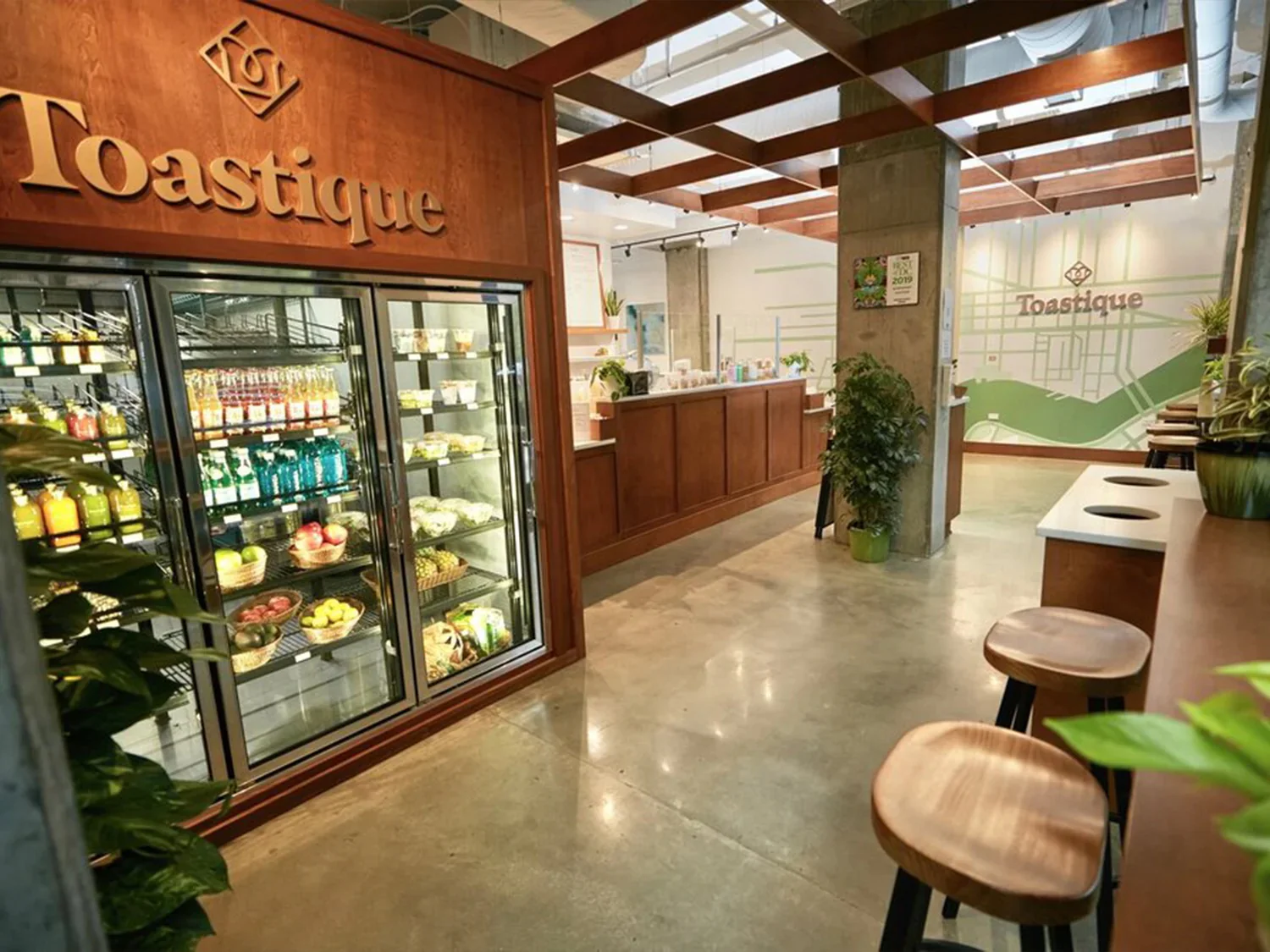
At Toastique, we’re built as an all-day café experience where cold-pressed juices play a leading role, supported by smoothies, bowls, and gourmet toasts. The goal is simple: create more reasons for guests to visit more often, and make the experience consistent every time.
Here’s how that connects to profitability drivers:
-
Daypart Coverage: options that work from morning through afternoon
-
Shareable Menu Experience: vibrant items guests genuinely enjoy posting and recommending
-
Streamlined Café Flow: designed for throughput and daily convenience
-
Training and Support: systems that help owners open with clarity and keep standards consistent
If you want to see the full concept overview, the next step is our juice bar franchise opportunity page.
Now let’s zoom out and talk about how to choose the right fit when you’re comparing options.
What To Look For In The Best Juice Bar Franchise
The best juice bar franchise is the one that matches your goals, your market, and how hands-on you want to be, especially in year one.
Here are performance-friendly signals to look for:
-
Clear Investment Expectations: transparent ranges and what’s included
-
Strong Training And Support: practical playbooks plus launch planning
-
All-Day Demand Potential: menu mix that supports repeat visits
-
Operational Simplicity: systems that help the team move quickly and stay consistent
-
Market Guidance: support that helps you choose the right location and territory strategy
Once you’ve compared the model, the next question is usually about owner income. Let’s talk about it in a realistic, encouraging way.
How Much Do Juice Bar Owners Make?
Owner income varies, and that’s normal. It reflects differences in rent, labor, traffic, and how involved the owner is day to day.
A helpful way to think about it is: owner income comes from profit, and profit comes from consistency.
A few factors that commonly shape owner income are:
-
Rent and Footprint Fit: A right-sized location can support stronger economics
-
Labor Plan: Smart scheduling and cross-training protect efficiency
-
Ingredient Management: Consistent portioning and ordering rhythm help protect margin
-
Volume and Repeat Visits: Steady traffic supports predictable performance
-
Your Role: Many owners build toward consistent pay as operations stabilize
Now let’s turn everything into a quick checklist you can use while you research.
Profitability Checklist For Evaluating A Juice Bar Franchise
Use this checklist to keep your evaluation focused and simple:
 Daypart Coverage: Does the menu support repeat visits across the day
Menu Mix: Does it encourage smart add-ons and steady average tickets
Throughput Potential: is the service flow designed for speed during peaks
Staffing Plan: Does the model support efficient scheduling and training
Startup Cost Range: Do the numbers include realistic assumptions
Working Capital Plan: Is there enough runway to open smoothly and build routines
Support Structure: Does the franchise provide training and launch planning
Your Year-One Role: Does it fit how involved you want to be early on
Ready To Explore Ownership: The Simple Next Steps
If this post helped you think through whether juice bar franchises are profitable, your next step can be simple and numbers-focused.
When you’re ready, you can:
-
Visit Toastique Franchise Performance Potential to understand how we talk about results and what to look for
-
Review How Much Does It Cost to Open a Toastique? to connect profitability drivers to real startup planning
See available territories: Available Franchise Territories


