


Quick Answer
The best juice bar and smoothie franchises to own in 2026 combine real consumer demand, repeatable unit economics, and a brand built on quality rather than a single passing trend. Strong options include Smoothie King, Toastique, Tropical Smoothie Cafe, Clean Juice, Playa Bowls, and Pure Green. Initial investments run from about $140,000 to over $1,000,000 depending on the model. The right choice depends on your budget, your local market, and how hands-on you plan to be.
Juice and smoothie bars have outgrown the strip-mall novelty phase, now anchoring shopping centers, airports, gyms, and downtown corners. For anyone weighing a business of their own, that raises a practical question: which juice bar or smoothie franchise is actually worth the money?
This guide compares the leading names on investment, menu, model, and ownership fit — including the comparison most guides skip: a focused juice or smoothie bar versus a broader healthy café that does both. The full landscape comes first, Toastique included.
What Is a Juice Bar or Smoothie Franchise?
A juice bar or smoothie franchise is a licensed business that sells blended drinks, cold-pressed juices, and related better-for-you items under an established brand, recipe set, and operating system. The franchisor provides the menu, supply chain, training, and marketing; the franchisee owns and runs the location, paying an upfront fee and ongoing royalties on sales.
The two terms overlap so much that most modern brands do both. The labels break down like this:
- Juice bars lead with cold-pressed and fresh-pressed juices, often adding wellness shots, superfood blends, and add-ins like collagen or greens.
- Smoothie franchises lead with blended drinks built around fruit, protein, and supplements, frequently positioned around fitness and meal replacement.
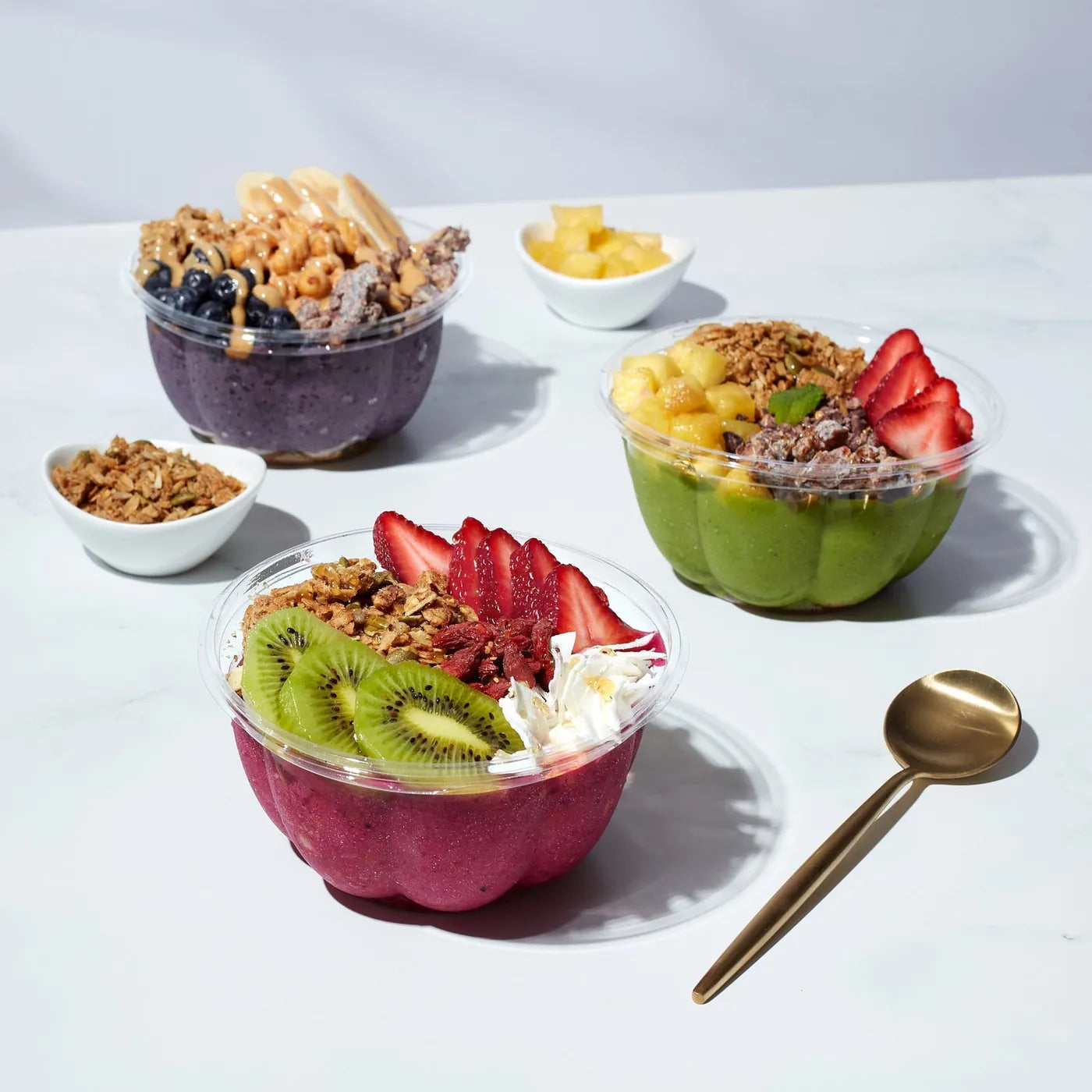
- Bowl-led concepts center on açaí and pitaya bowls, with smoothies and juices alongside.
- Multi-category healthy cafés serve juice and smoothies as part of a wider menu that can include toast, bowls, and coffee.
Featured-snippet definition: A juice bar or smoothie franchise is a fast-casual business that licenses an established brand to sell fresh juices, blended smoothies, and health-focused food, in exchange for an upfront fee and ongoing royalties. It sits between fast food and full-service dining: customers order at a counter, items are made fresh, and prices land at a modest premium.
The most useful way to read the category is not juice versus smoothie, but single-product versus multi-category: how many menu lines and dayparts a store actually earns from. That distinction shapes investment, risk, and earning potential more than the name over the door.
Why Are Juice Bar and Smoothie Franchises Growing in 2026?
Demand for fresh, functional food and drink has moved from trend to habit. Younger buyers read labels, track protein, and pick brands that fit an active lifestyle — and the behavior shows up in the broader data.
That demand sits inside a very large market. The U.S. fast-food industry runs to roughly $399.2 billion a year and serves about 84 million American adults every day. Within that spend, better-for-you options are the fastest-moving part — the plant-based segment alone is worth about $56.99 billion. Juice and smoothie concepts sit where those two forces meet: fast-casual convenience and a steady pull toward healthier choices. Franchising is riding the same wave: the International Franchise Association reports steady year-over-year growth in establishments and output, with food and beverage among the most active segments.
Why juice and smoothie concepts in particular keep gaining:
- Demographics favor them. Millennials and Gen Z, the dominant spending cohorts, prioritize wellness and pay a premium for it.
- Compact footprints. Many run from small spaces with limited cooking equipment, lowering build-out and labor costs versus full kitchens.
- Built-in social reach. Colorful, photogenic drinks and bowls drive organic word of mouth that older chains struggle to buy.
- Flexible placement. The model fits gyms, campuses, transit hubs, and mixed-use centers, opening more viable sites.
- Resilient demand. Wellness spending has held up better than discretionary fast food during tighter periods.
This is a structural change in eating habits, not a fad cycle. Brands built around it have a long runway — which is why so many franchise buyers are looking at the category now.
What Makes a Strong Juice Bar or Smoothie Franchise?
Strong concepts share a specific set of traits, and learning to spot them protects you from hype.
Look for these signals:
- Proven unit economics. The Franchise Disclosure Document (FDD) Item 19 should show real average sales for existing locations, not projections.
- More than one revenue stream. A store selling across drinks, bowls, or food, and more than one daypart, is steadier than one dependent on a single afternoon rush.
- Durable demand, not a single fad item. Brands tied to one trendy product are exposed when that product cools. Broader menus spread that risk.
- Real franchisee support. Site selection, build-out guidance, training, and grand-opening systems separate professional franchisors from licensors who collect a fee and disappear.
- Financial transparency. Clear costs, defined royalties, and a willingness to connect you with current owners.
- A defensible brand. Distinct positioning and loyal customers, so you are not competing on price with the smoothie counter next door.
- Open territory. Available markets near you and a credible national expansion plan.
If a franchisor cannot or will not point you to these fundamentals, treat that as a warning sign.
Best Juice Bar & Smoothie Franchises to Own in 2026
Measured against the criteria above, the brands below are among the most recognized and active juice, smoothie, and bowl franchises in the U.S. They are presented for comparison, not ranked; the right fit depends on your budget and market. Investment figures are approximate, drawn from each brand's published FDD and listings such as Entrepreneur Franchise 500 and Franchise Direct.

Smoothie King
Strength: scale and recognition — one of the largest smoothie brands, with a grab-and-go menu of wellness-focused blended drinks. Best for an owner who wants a proven national name and simple operation. Trade-off: smoothie-led, so revenue rides on a single product line.
Tropical Smoothie Cafe
Strength: a hybrid menu — smoothies plus real food (wraps, sandwiches, flatbreads), covering more dayparts than a pure bar, on a national system. Best for an operator wanting drinks plus a lunch kitchen. Trade-off: a food menu adds complexity a drinks-only bar avoids.
Toastique
Strength: breadth — cold-pressed juice and smoothies within a wider menu of gourmet toast, smoothie bowls, and specialty coffee, a multi-category café competing for the same health-minded customers. Best for an owner-operator, or a qualified semi-absentee owner with restaurant and multi-unit experience, wanting diversified, all-day revenue. Trade-off: a fuller menu means higher investment and more to run well — see below.
Clean Juice
Strength: certified USDA-organic — serving cold-pressed juices, smoothies, and bowls to a quality-focused customer. Best for an owner building a brand on organic positioning. Trade-off: organic sourcing can raise food costs, and the menu still centers on the juice-and-smoothie core.
Playa Bowls
Strength: category leadership — a coastal açaí-and-pitaya concept gone national, with smoothies and juices alongside the bowls and a youthful, lifestyle brand. Best for an owner in a beach, campus, or urban market. Trade-off: bowl demand is seasonal and location-sensitive, so siting is critical.
Pure Green
Strength: accessibility — a low-cost, small-footprint model centered on cold-pressed juice, smoothies, and superfoods. Best for a budget-conscious first-time owner. Trade-off: a narrower menu and fewer dayparts leave little to fall back on if one product cools.
How the Top Juice & Smoothie Franchises Compare
The fastest way to compare these concepts is side by side — investment, menu, model, and fit. Start with estimated investment, since it often sets the shortlist.
Estimated investment by brand
| Franchise | Est. Total Investment | Franchise Fee | Position in Range |
|---|---|---|---|
| Pure Green | ~$143,000 – $478,000 | Varies by FDD | Lower entry |
| Clean Juice | ~$249,000 – $609,000 | Varies by FDD | Lower to mid |
| Smoothie King | ~$281,000 – $1,060,000 | Varies by FDD | Wide range |
| Playa Bowls | ~$282,000 – $911,000 | Varies by FDD | Mid to high |
| Tropical Smoothie Cafe | ~$312,000 – $711,000 | Varies by FDD | Mid |
| Toastique | $471,152 – $890,846 | $55,000 (single unit) | Higher, full café |
Figures are approximate ranges from published FDDs and listings; confirm the current Item 7 in each brand's latest FDD before budgeting. Toastique's own range sits above single-product juice bars, but stays comparatively low for a full restaurant concept — typical restaurant build-outs run $500,000 to $2,000,000 — because its compact footprint requires no ovens, fryers, or hoods.
Menu diversity, business model, differentiation, and ideal franchisee
| Franchise | Menu Diversity | Business Model | Differentiation | Ideal Franchisee |
|---|---|---|---|---|
| Smoothie King | Narrow (smoothies, blends) | Smoothie-led, grab-and-go | Scale and brand recognition | Owner wanting an established national name |
| Tropical Smoothie Cafe | Moderate (smoothies + food) | Fast casual with a food menu | Smoothies plus lunch-capable food | Operator who wants a hybrid drink-and-food menu |
| Clean Juice | Moderate (juice, smoothies, bowls) | USDA-organic juice bar | Certified-organic positioning | Owner focused on organic, quality-first branding |
| Playa Bowls | Moderate (bowls, smoothies, juice) | Bowl-led fast casual | Bowl-category leadership and youthful brand | Owner in a coastal, campus, or urban market |
| Pure Green | Narrow (juice, smoothies, superfoods) | Lower-cost juice bar | Smaller footprint, lower entry cost | Budget-conscious first-time owner |
| Toastique | Wide (toast, bowls, juice, smoothies, coffee) | Premium multi-category café, all dayparts | Multi-category menu + all-day coverage | Hands-on owner-operator wanting a differentiated premium brand |
|
Single-product bars Juice or smoothie only |
→ |
Multi-category cafés Juice • smoothies • bowls • toast • coffee |
What the tables actually tell you: investment and menu breadth move together. The cheaper a concept is to open, the narrower it usually is — and the more its fortunes ride on one product. So the real question is not which brand has the best single number, but which business model you want to own. The biggest mistake first-time buyers make isn't picking the wrong brand — it's picking the wrong model for their capital, market, and involvement.
Which Franchise Fits You?
If one of these is your top priority, it points to a starting place:
- The lowest entry cost → Pure Green
- The strongest national brand recognition → Smoothie King
- Smoothies plus a lunch-capable food menu → Tropical Smoothie Cafe
- Certified-organic positioning → Clean Juice
- A bowl-first concept → Playa Bowls
- Diversified revenue from a premium, multi-category model → Toastique
These are starting points, not verdicts — validate any shortlist against the brand's FDD and current owners before committing.
Juice Bar Franchise vs Multi-Category Healthy Café Franchise
Those quick matches rest on one deeper decision most buyer guides gloss over. A focused juice bar or smoothie franchise centers on one product line; a multi-category healthy café franchise sells juice and smoothies as part of a wider menu that can include bowls, toast, and coffee. Both chase the same wellness customer, but carry very different risk and earning profiles.
| Factor | Juice Bar / Smoothie Franchise | Multi-Category Healthy Café |
|---|---|---|
| Menu breadth | Narrow (juice / smoothies) | Wide (juice, smoothies, bowls, toast, coffee) |
| Daypart coverage | Often one or two peaks | Breakfast through afternoon |
| Revenue resilience | Tied to one product trend | Spread across categories |
| Average ticket | Lower | Higher (attachment, coffee, food) |
| Build-out and operations | Simpler, smaller footprint | More involved, larger menu to run well |
| Typical investment | Often lower | Often higher |
| Best for | Lower-cost, focused entry | Diversified revenue and pricing power |
Advantages of a focused juice or smoothie bar: lower entry cost, simpler operations, a faster learning curve, and a smaller space to staff and manage — genuinely valuable for a first-time owner with limited capital.
The trade-off: revenue is concentrated in one product and one or two dayparts. If demand softens, or a competitor opens nearby and undercuts you, there is little else to carry the store.
Advantages of a multi-category healthy café: several menu lines and dayparts mean more revenue from the same rent and staff, a higher average ticket through attachment, and a hedge when any category cools. The trade-off: a higher upfront investment and a more complex menu to run well.
Neither model is universally better — it comes down to whether you would rather minimize upfront cost or spread revenue across the day.
Why Toastique Stands Out Among Juice and Smoothie Franchises
Among the brands here, Toastique occupies a distinct spot: it competes for the same health-minded customers as a dedicated juice or smoothie bar, but is built around a full, multi-category menu rather than a single hero product. That menu exists to serve the brand's mission: to make healthy eating approachable, accessible, and enjoyable for all, under its mantra, "Nourish Every Moment."

What sets it apart:
- Cold-pressed juice and smoothies as part of a wider menu. Toastique serves them alongside smoothie bowls, gourmet avocado and specialty toast, and specialty coffee. When one category cools, the others carry the store — a built-in hedge single-product bars lack.
- All-day daypart coverage. The menu sells from the breakfast rush through the afternoon, not just one peak — widening the revenue window each location captures.
- Premium, health-forward positioning. The brand serves people who care about what they're putting into their bodies — customers happy to spend a little extra knowing their meal is fresh, wholesome, and made with responsibly sourced ingredients — supporting healthier margins than price-driven concepts.
- A founder-led system. Toastique was founded in 2018 by former Division I athlete and Forbes 30 Under 30 honoree Brianna Keefe, who opened the flagship in Washington, D.C.'s Wharf District — built in just 40 days and generating over $1 million in first-year sales with no professional marketing.
- Real momentum. The system has grown to 103 franchisees, with 63 franchise units open and 33 more in development on signed leases, and more than 226 locations awarded since franchising began in 2020 — and it is actively expanding nationwide, with registration intended in every state except Hawaii and North Dakota.
- A documented track record. In 2025, all operational franchise outlets open for two or more years averaged $745,577 in gross sales, with the top location generating $1,122,669. Review the full Item 19 in the 2026 FDD before projecting your own.
- Sustainability and community at the core. Ingredients are locally sourced, prepared in-house, and all-natural, with proprietary cold-pressed juice, granola, and coffee crafted alongside like-minded small-business partners, and orders served in recycled to-go containers with compostable straws.

For a buyer comparing pure juice and smoothie bars, Toastique raises a simple question: earn from one product line, or several under one roof? If a broader, premium concept appeals, explore the Toastique franchise opportunity and the training and support program for new franchisees.
Comparing Investment Ranges
The cost depends on the concept, your location, and the build-out. For comparison, total initial investment across the brands in this guide runs from roughly $140,000 to over $1,000,000 — focused juice and smoothie bars toward the lower end, full-menu cafés higher. The brand-by-brand ranges in the comparison table above are what most buyers use to set a shortlist.
The detailed cost components, financing routes, and working-capital planning behind those numbers are a topic in their own right. Ultimately, investment is only one factor to weigh when comparing franchise opportunities — menu breadth, business model, daypart coverage, and available territory matter just as much.
Mistakes to Avoid When Buying a Juice or Smoothie Franchise
Most franchise disappointments trace back to a handful of avoidable errors — nearly all of them before signing, not after opening:
- Skipping the FDD. The Franchise Disclosure Document holds the costs, obligations, litigation history, and Item 19 financials. Read every page, ideally with a franchise attorney.
- Ignoring Item 19, or trusting projections instead. Base your expectations on documented results from real units, not a salesperson's optimism.
- Not calling current franchisees. Existing owners will tell you what daily life and real margins look like. Skipping this is the most common regret.
- Underestimating working capital. Many failures are not bad concepts; they are owners who ran out of cash before the location matured.
- Buying a single-product fad. A bar tied to one trendy item is fragile. Favor durable demand and, where you can, more than one revenue stream.
- Picking a weak location. Site selection is the highest-leverage decision you make. Lean on the franchisor's real estate support.
- Assuming it is passive income. Most food franchises, especially in year one, require active, hands-on leadership.
- Overlooking the total cost of ownership. Royalties, marketing fees, and renewal terms all affect long-term returns, not just the upfront fee.
Avoid these and you remove most of the risk that is actually within your control.
Frequently Asked Questions
What is the best juice bar or smoothie franchise to own?
There is no single best juice bar or smoothie franchise for everyone; the right pick depends on your budget, your market, and how hands-on you want to be. Well-known 2026 options include Smoothie King, Tropical Smoothie Cafe, Clean Juice, Playa Bowls, Pure Green, and Toastique. Single-product juice and smoothie bars cost less to open but lean on one revenue stream. Toastique sits at the broader end, serving cold-pressed juice and smoothies alongside toast, bowls, and coffee, which spreads sales across more of the day. Match the model to your capital and your appetite for involvement, then verify the numbers in each brand's FDD.
How much does it cost to open a smoothie franchise?
Most juice bar and smoothie franchises require a total initial investment between roughly $140,000 and $1,060,000, depending on the brand, the build-out, and your location. Focused juice or smoothie bars sit toward the lower end; full-menu cafés sit higher. For example, Pure Green reports total investments starting around $143,000, while Toastique's 2026 FDD lists $471,152 to $890,846 for its multi-category café. Always confirm current figures in each brand's latest Franchise Disclosure Document before budgeting.
Are juice bar and smoothie franchises profitable?
They can be, but no franchise guarantees a profit. Profitability depends on location, average ticket, labor and food costs, royalties, and how well the store is run. The reliable way to gauge potential is to read each brand's FDD Item 19 financial performance representation and talk to current owners. As one reference point, in 2025 Toastique's operational franchise outlets open for two or more years averaged $745,577 in gross sales, with the top location generating $1,122,669 (2026 Franchise Disclosure Document, Item 19, Table 10). Gross sales are not profit, but a strong top line and disciplined operations are the foundation of a profitable location.
Is a juice bar franchise a good investment in 2026?
A juice bar franchise can be a sound investment if the brand has proven unit economics, real franchisee support, and open territory in your market. The category benefits from durable consumer demand for better-for-you food and drink. The main risk is concentration: a pure juice or smoothie bar depends on one product line and one or two dayparts. Many buyers weigh that against multi-category concepts that earn across breakfast, lunch, and the afternoon. Either way, judge the specific brand on its numbers, not the category's reputation.
What is the difference between a juice bar franchise and a smoothie franchise?
The two overlap heavily and many brands do both. A juice bar leads with cold-pressed and fresh-pressed juices and often adds wellness shots and superfood add-ins. A smoothie franchise leads with blended drinks built around fruit, protein, and supplements. In practice, most modern concepts sell both juices and smoothies, and some add bowls, toast, or coffee. The more useful distinction for a buyer is single-product versus multi-category: how many menu lines and dayparts the store actually earns from.
Which smoothie franchise has the lowest startup cost?
Among well-known brands, focused juice and smoothie concepts with smaller footprints tend to have the lowest entry costs. Pure Green, for instance, reports total investments starting around $143,000. Clean Juice and some smoothie-led models also sit toward the lower end of the range. Keep in mind that a lower entry cost usually means a narrower menu and fewer revenue dayparts, so weigh the upfront savings against long-term earning potential before deciding.
Do I need experience to open a juice or smoothie franchise?
Most juice and smoothie franchises, including Toastique, do not require prior restaurant experience because the franchisor supplies recipes, systems, training, and ongoing support. What matters more is hands-on leadership, comfort managing hourly staff and daily operations, and enough capital to reach maturity. Toastique also offers a semi-absentee path for owners with a strong restaurant background and proven multi-unit management success. The first year is usually the most demanding. If you can commit to learning the system and leading your team day to day, a lack of restaurant background is not a barrier to ownership.
Is Toastique a juice bar or smoothie franchise?
Toastique is both, and more. It serves cold-pressed juice and smoothies alongside gourmet toast, smoothie bowls, and specialty coffee, which places it in the broader healthy-café category rather than a single-product juice or smoothie bar. That structure means a Toastique location earns from several menu lines and across all dayparts, while still competing directly for the same health-minded customers a dedicated juice or smoothie bar targets. It was founded in 2018 in Washington, D.C. by Forbes 30 Under 30 honoree Brianna Keefe.
What should I check before buying a juice or smoothie franchise?
Read the full Franchise Disclosure Document, study the Item 19 financial performance representation, and call several current owners before you commit. Confirm the total investment, royalty rate, and marketing fees; assess support for site selection and training; and verify there is open territory in your market. Favor concepts with proven unit economics, durable demand, and ideally more than one revenue stream. Finally, budget enough working capital to carry the business through its first year before the location matures.
Questions to Ask Yourself Before Choosing a Juice Franchise
Answer these clearly and you're close to a confident decision:
- How much capital can I invest without draining my reserves before the store matures?
- Do I want to run a single product line, or several menu categories under one roof?
- How many dayparts can this concept realistically sell across in my market?
- Is there open territory for this brand where I want to operate?
- What do the FDD's Item 19 numbers — and current owners — say about real performance?
- Am I prepared to lead hands-on, especially through the demanding first year?
- Which matters more to me: a lower entry cost, or more diversified revenue?
Final Recommendation
The juice bar and smoothie category is one of food service's more durable opportunities right now — but not every brand is a good buy. The strongest pair real demand with proven unit economics and a franchisor that genuinely supports its owners.
Use this guide as a framework: confirm the numbers in each brand's FDD, talk to current owners, and match both investment and business model to your capital and market. The earlier comparison points the way — a focused bar for the lowest-cost entry, a multi-category café for diversified revenue.
For buyers who want that broader, premium model, Toastique is worth a serious conversation: it serves juice and smoothies alongside toast, bowls, and coffee, carries documented unit economics, and has open national territory — the combination that makes it stand out among 2026's juice bar and smoothie franchise options.

Ready to Explore the Opportunity?
If you are weighing a juice bar or smoothie franchise, Toastique makes it easy to learn more. Review the franchise opportunity overview, see the full investment and cost breakdown, check available territories in your area, and read real owner reviews. When you are ready, the franchise application takes just a few minutes, and a member of the Toastique franchise team will follow up to answer your questions.
Start your Toastique franchise inquiry today

