If you’ve ever wanted to get into the restaurant industry, this is the right time to do it. The economy is opening up and the pent-up demand for eating out is about to hit the sector. But instead of building an independent restaurant from scratch or being part of a casual fast-food chain, your best bet might be to buy a healthy food franchise. After more than a year in suspended animation, the economy is getting back on track. There was a pause in customers’ engagements with their usual restaurant brands. Now they’re willing to try out new names. This is the best time to start your entrepreneurial journey as customers would be looking to try out new products and formats of services.
Let’s pause for a second here. Who’s the ‘you’ in the sentence? Who does this apply for? You should consider buying a healthy food franchise if you are a:
‘Food’ entrepreneur: You’ve always wanted to be in the restaurant industry. You love cooking and serving food. You know all the celebrity chefs and watch all the cooking shows on television. Your social media feed has more than its share of food-related posts.You probably ran a restaurant at some point. Now you’re looking for a concept that’s proven and growing. No matter what, you can’t think of being in any other industry.
‘Non-restaurant’ entrepreneur: You believe entrepreneurship is the way to go. You’re not sure what industry or sector to get into but you’re sure that it’s time to start something on your own.
You’ve been looking at viable opportunities and have done your research on at least one. Although you don’t have any experience in the restaurant industry, you know the potential of the sector and you are a fast learner.
Business owner: You already run a business, typically, a small-scale, neighborhood venture. It could be a grocery, an office supplies store, or a bookshop. Maybe you’re looking for something with steady growth potential or something that’s immune from the e-commerce competition.You probably have your own commercial space or have ready access to it. You know how to get the necessary approvals and can hire people fast. All you want is a viable idea.
If you’re from the restaurant sector, what you need is a future-proof concept. You need something that doesn’t have the usual risks associated with the sector and is in sync with the market demands. Plus, one that doesn’t require any wasted spending. If you’ve never considered the food business, a healthy food franchise is a highly viable opportunity. Amidst all the talk about startups, what we tend to forget is that a business ultimately has to find customers, get consistent revenue, and be stable. A healthy food franchise does all of that. It checks all the boxes.
WHY HEALTHY FOOD FRANCHISES ARE THE FUTURE
As Americans flock to find their new favorite restaurants, the focus will be different this time around. They won’t be blindly patronizing the typical fast-food chains or drive-throughs. They’ll be looking at healthier choices, and restaurants that are not synonymous with healthy food won’t be their priority anymore. The pandemic was the biggest disruptor in the last half a century or more. It brought to a halt all economic and commercial activities and confined us to our homes. In a way, that gave us time to assess our lifestyles. As normalcy returns, people will be looking at alternatives to their previous choices. Eating healthy will be prime among them. But is the pandemic the only reason for people discovering healthy food choices? Is it another trend that’ll go away within a year or so? Should one make a life-changing decision like buying a healthy food franchise based on a fleeting trend? Eating healthy isn’t a trend that people have suddenly discovered. And the pandemic isn’t the only trigger for the growth in the industry. It’s the result of several factors compounding over the years. Let’s take a deep dive to discover why healthy eating is here to stay.
OFFSETTING PANDEMIC INERTIA
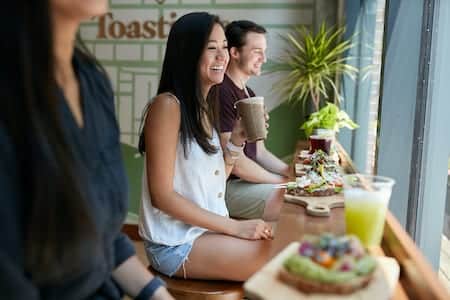
Let’s admit it, the pandemic made us all passive. Work from home meant that there was a substantial reduction in our physical activity. We didn’t have to drive, didn’t have to walk to meetings or the pantry, and didn’t have to take the stairs. Importantly, we couldn’t head to the gym or go for a walk in the park. We were glued to the chair or the couch. Either we were working or binge-watching shows on television or our computers. It also meant that we could snack at any time without fear of being judged by our colleagues. Whether we were at our desk or on the couch, we could afford to eat whatever we wanted. Barring a select, disciplined few, there was not much physical activity, exercise, or healthy eating for the vast majority of us. And now there’s a realization that things have to change. People know that they’ve got to put an end to the unhealthy and sedentary lifestyle they’ve pursued over the last 18 months or so. So, when they step out, they might consider moving away from the usual calorie-ridden fast-food staples and opt for something healthy.
INCREASING HEALTH AWARENESS
Whether or not they prefer to eat healthily, people are aware of the consequences of unhealthy food. Most people know that there are healthier options that are superior to the mass-produced ones they’ve been consuming. The pandemic has also revealed the problems of obesity that arise from carb-filled diets. Consumers are now aware of the need for a healthy lifestyle that builds immunity. The age-old junk food recipe of fast-food chains will still find takers but there’ll be a perceptible demand for food that’s good for the individual and the local economy. There’s increased demand for everything from organic to locally sourced ingredients. Kombucha, agave, multigrain tortillas, and steel-cut oats may not have been well-known even a few years ago. But today, consumers are asking for such ingredients. Concepts such as plant-based meat, only in the fringes until even two or three years ago, are fully mainstream now. The trend is led by millennials, the largest consumer group in the United States. According to some surveys, 30% of them prefer to eat organic, while the demand for gluten-free or low-carb options is steadily growing. Consumers are also mindful of where their food is sourced from and its carbon footprint. Locally sourced food that supports the local economy and independent farmers is preferred over others. Sustainability is also of the utmost importance to this new breed of consumers who don’t mind spending extra for ethically sourced food. Women are at the forefront of choosing healthful foods that are low-calorie and low-fat. Their behavioral and buying intentions are more pronounced than those of men. Since women play a significant role in where a family gets to eat, this will be good news for healthy food franchises.
MEDIA EXPOSURE
One of the biggest drivers towards healthy eating has been cooking shows and their celebrity chefs on television. Until a few years ago, visual appeal and taste were the primary features to judge the food. But the various food shows have changed those yardsticks. Now there’s an increasing focus on how healthy what’s on the plate is. There has also been an explosion of ‘healthy celebrity’ chefs with massive followings on social media. This moved healthy food options from the periphery to the mainstream. Ingredients that were otherwise considered too offbeat, like kale, quinoa, or asparagus, are now in the spotlight due to the efforts of these chefs. It also made healthy food tastier. The earlier assumption was that if the food was healthy, it certainly wouldn’t be appetizing. The cooking shows and the Instagram feeds of these celebrity chefs have changed that notion. People now know that they can have food that’s organic, gluten-free, nutritious, sustainable, and tasty. With the normalization of healthy food, there’s increasing peer pressure to opt for healthier diets. When all their friends and colleagues start posting about superfood smoothies and juice cleanses, there’s a social endorsement for healthy eating. That makes it easy to suggest a healthy food franchise when eating out. It also encourages people to post their healthful food on social media which creates a virtuous cycle.
WHY YOU SHOULD BUY A HEALTH FOOD FRANCHISE INSTEAD OF STARTING AN INDEPENDENT RESTAURANT
As we’ve seen, there’s a demonstrable move towards healthier diets and healthy foods. If you’re an entrepreneur, it’s the right space to get into. But some of you might wonder why you’ve to buy a franchise. What’s wrong with building one from scratch? After all, buying a franchise is joining a business, as opposed to starting something, right? Plus, when you build a restaurant, you get the chance to name it and make it yours. So, why buy a health food franchise?
SAFER INVESTMENT
Starting something entails a significant amount of risk. Setting up the restaurant means investing in a place, getting all the necessary equipment, finding the right staff, and then creating a viable menu. Even with all that, there’s no guarantee that customers will flock to your place. When you buy a proven healthy food franchise, you’re minimizing your risk. The concept has already been successful in other markets which means that so you don’t have to start from scratch. That business model will show you where you have to focus and where you don’t have to splurge.
PROVEN MENU
If you’re starting an independent health food restaurant, you’ll have to spend a significant amount of time coming up with the right menu that has the right value proposition. It’ll have to be different and in sync with customer expectations. Also, it can’t be merely trendy as the initial interest may go down soon. As a restaurant entrepreneur, you may have to experiment for months until you find a functional and profitable selection. With a healthy food franchise, you’re getting a menu that customers already like. The experimentation and optimization have already been done.
COST AND TIME SAVINGS
Every new business needs to attract customers and the products may not be enough to entice them. When launching an independent restaurant, since there’s little brand equity or awareness, you’ll have to spend on the ambiance and interior decoration. Other than the expected costs, you’ll also be wasting time on this front. When you buy a health food franchise, you’re also buying a proven format. There’s no need to needlessly spend on infrastructure or interiors. You only have to repeat what has already worked elsewhere. This saves you money and time.
MULTIPLE REVENUE STREAMS
Building a restaurant from scratch means focusing on one thing until it works. Most fast-casual dining establishments are geared toward increasing walk-ins with delivery as an afterthought. This reliance on a single revenue source can be risky and limiting to growth. Depending on the franchise you buy, you may get one with several revenue streams. If the walk-ins are slow for some reason, you can always turn to other sources to maintain your revenue. Some established brands are also good at catering. All these translate to steady and growing revenue, which is something every business needs.
BUILT-IN BRAND EQUITY
Any product or service needs to be advertised to get people interested. If you’re launching an independent restaurant, you’ll have to spend on marketing to influence and persuade customers. So, you’ll have to start from scratch and think of a unique brand name. Then you’ll have to pay an advertising or design agency to design the logo, menu, signboards, staff uniform, and all other marketing collateral. As anyone who’s ever been involved in the launch of a product or service will tell you, all these will take time.
Once you finalize a name, logo, and other design elements, it’ll be time to market your brand. You may have to create and release newspaper ads, billboards, leaflets, and even go for paid promotion on newspapers or find an influencer on social media. You may also have to do public relations through food bloggers or restaurant critics. Along with that, you’ll have to hire a digital marketing agency. Then it’s time to create a website, run a digital marketing campaign with paid ads, and work on your local search engine optimization (SEO) strategies. Of course, then comes the important task of building social media profiles and getting followers. All these will require consistent investments. Even with the best digital marketing strategies, your social media pages and website will need some time to gain traction. Remember that you’ll have to pay the advertising or digital marketing agency on top of the media costs involved with the campaigns. If marketing is new territory for you, it would be sensible to hire someone who’s experienced. That too will cost money.
There’s something else that most entrepreneurs forget about digital marketing and social media in particular. It’s that creating assets can also be expensive and time-consuming. For example, you’ll have to hire a professional photographer or videographer to take pictures and videos of the food, the restaurant, your staff, etc. for your social media pages. One of the greatest advantages of buying an established healthy food franchise is that you don’t have to do most of the above. The brand would – or rather should – be well-known and hence there won’t be any need to advertise it. Aside from the savings, this means that you can launch faster. You’ll also save time that you’d otherwise have spent on designing your collateral and getting your digital assets in order. The healthy food brand would have a website and social media presence. Some of them even have thousands of followers on Instagram which will make your task exponentially easy. You won’t have to start your follower count from zero and rely on paid promotion for visibility. Your business already would’ve followers. Once the brand mentions your new location, those followers who’re in your vicinity would be excited to know more about you. Plus, there’s no need to spend time and money taking photographs and videos. The brand’s existing digital marketing team would be glad to assist you with those.
CHOOSE WELL AND START YOUR HEALTHY FOOD FRANCHISE JOURNEY
It makes immense sense to buy a healthy food franchise to minimize your risk and maximize your returns. What you want is a growing brand with a proven business model and credible social media presence, like Toastique. Along with the exceptionally high returns, multiple revenue streams, and the lean model, what the brand also offers is a network spearheaded by the Founders to help new Franchise Owners. Plus, Franchise Owners will have exclusivity on their zones to avoid needless competition that’ll erode the brand equity and drive down prices. To know more about this immensely profitable opportunity, please visit our franchise website for more information.Like us on Facebook. Follow us on Instagram. Subscribe to our YouTube channel. (Warning: May result in intense cravings- visit at your own risk!)
It started with one café.
In 2018, Brianna Keefe opened Toastique at The Wharf in Washington, D.C. The concept was simple: gourmet toast, smoothie bowls, cold-pressed juices, and espresso made with fresh, clean ingredients. Food that looked as good as it tasted. A space that felt vibrant and intentional.
Locals loved it. Lines formed. People came back. And back again.
By 2020, Toastique opened franchising Toastique to the public. The response? More than anyone expected. Four years later, Toastique franchise growth has reached 97 franchise partners across 25+ states, from California to New York, Texas to Minnesota. The 100th café is on the horizon.
This franchise expansion case study tells the story of how it happened. And more importantly, the people who made it happen.
What Franchisees Were Looking For
You've probably felt it before.
The alarm goes off. You head into work. Meetings stack up. Hours disappear. And somewhere along the way, you start wondering, is this really what I want?
That's where so many Toastique franchisees started. Successful on paper. Burned out in reality.
Some spent decades in corporate roles. Others served in the military. A few faced health challenges that changed their perspective entirely. But they all reached the same point: ready for something different. Something that matched how they actually wanted to live.
The problem? Finding it wasn't easy.
Traditional franchises felt too rigid. Fast food didn't align with their values. And walking away from a steady paycheck to become an entrepreneur? That's not a small decision.
Francisco Vallejo knows the feeling. He and his wife, Marisel, now own Toastique Laredo. But getting there took a shift in mindset.
"After facing challenges with my own health, I realized it was time to make a change. Now, my wife and I are committed to nourishing our bodies with wholesome, high-quality ingredients — and we wanted to bring a concept to Laredo that reflects those values." — Francisco Vallejo, Franchise Owner, Toastique Laredo
The doubts were real. The hesitation was valid. But for the right opportunity? Worth pushing through.
Why Toastique
Toastique offered something different.
Not just a café. A concept that matched how you already want to live. Fresh, vibrant, and intentional. The kind of place you'd actually want to spend time in. And a business model designed to make ownership feel possible, not overwhelming.
A Menu Worth Believing In
Picture gourmet toast piled with creamy avocado, heirloom tomatoes, and peppery microgreens. Smoothie bowls layered with açaí, fresh fruit, and house-made granola. Cold-pressed juices in every color. Handcrafted espresso drinks.
Every item looks nourishing and delicious. And they really are. The kind of food people photograph before they take a bite. And share with everyone they know.
But it's more than visuals. The menu drives traffic all day. Morning lattes. Lunchtime toasts. Afternoon smoothies. That means multiple revenue streams — and guests who make Toastique part of their routine.
A Model Built to Work
Investment ranges from $472K to $891K, depending on location and format. Training is hands-on, 254 hours total. That breaks down to 32 in the remote and 222 onsite at Toastique's D.C. flagship.
Most franchisees go from signing to opening in 11 to 14 months. Operations stay simple. Quick ticket times. Minimal waste. Efficient layouts. And if you're thinking bigger, developer agreements let you build 6 to 10 locations.
A Team That Actually Shows Up
Behind every Toastique café is a corporate team of 25+ people. Founders lead Approval Day and train themselves. You get support with on-site selection, build-out, and grand-opening marketing, plus ongoing guidance from field consultants.
Tiffany Siegel noticed it immediately. She and her husband, Todd, opened Toastique's first Manhattan location at Bryant Park.
"We were pleasantly surprised that the more we learned, the better the business opportunity seemed. We love that they were transparent from day one – it speaks to their character." — Tiffany Siegel, Franchise Owner, Toastique NYC, Bryant Park
Chrissy Sileo saw it in the culture. She and her husband, Brad, opened in Mt. Lebanon, Pennsylvania.
"When we walked into a location, the employees didn't change their behavior when the founders arrived. Everyone just seemed happy and comfortable to see them. I liked that feel. People seemed to think that was a good place to be and a good place to work." — Chrissy Sileo, Franchise Owner, Toastique Mt. Lebanon
That feeling of trust, transparency, and real partnership turned curiosity into commitment. Over and over again.
97 Partners. 25 States. Here's Why.
Results tell the real story.
Since launching franchising in 2020, Toastique franchise expansion has reached 97 franchise partners across 25 states. Over 226 Franchise Agreements have been awarded.
And the financials back it up.
System-Wide Performance (FDD Item 19, 2026):
Average gross sales of Franchise outlets open 2+ Years: $745,577 (Refer to 2026 Franchise Disclosure Document Item 5
Top-performing location: $1,122,669 ear(footnotes)
Where Toastique Has Landed:
California: 12 locations (largest state footprint)
D.C./Maryland/Virginia: 14 locations
Texas: 7 locations
Colorado: 5 locations
New Jersey: 5 locations
From major metros like NYC, LA, and Dallas to unexpected markets like Rapid City, Wichita, and Laredo — the brand keeps expanding.
Sam Hunter, who opened Toastique Chesapeake with his wife, TC, after 46 combined years in the Navy, recalls the moment it clicked.
"We walked away with our questions answered and feeling comfortable that this was the right choice for our family." — Sam Hunter, Franchise Owner, Toastique Chesapeake
For franchisee after franchisee, the numbers made sense. But it was the people and the process that sealed the deal.
The ROI Story
62% of Toastique franchise partners have signed agreements to open a second location.
Think about what that means.
These aren't people browsing websites or sitting in on webinars. They're owners who've lived the business. They've run the morning rush, trained their teams, and built relationships with their communities. They've seen every side of the operation.
And they're ready to do it all over again.
Four Years of Growth:
2021: 6 locations
2022: 12 locations
2023: 20 locations
2024: 36 locations
2025: 58 locations
Nearly 10x growth. And it's not slowing down.
The Momentum Keeps Building
On June 29, 2024, Toastique celebrated its 25th location opening. Just 14 months later—September 6, 2025—the 50th café welcomed its first guests.
That's 25 new locations in a little over a year. Not a plateau. Not a slowdown. Just steady, consistent momentum.
And the 100th location? Already taking shape.
Real Owners & Real Stories
Numbers only tell part of the story. The rest comes from the people who took the leap.
Tiffany & Todd Siegel — NYC Bryant Park (April 2025)
After years in corporate roles and a stint living in London, Tiffany and Todd were ready for something that felt more like them. They explored hundreds of franchise concepts before finding Toastique. The menu matched how they lived. The leadership felt genuine. Now they run the brand's first Manhattan location — steps from Bryant Park.
Brad & Chrissy Sileo — Mt. Lebanon, PA (June 2025)
Empty nesters looking for their next chapter. Chrissy is a yoga instructor. Brad is a tech entrepreneur. They weren't looking to slow down but wanted to build something together. Toastique's people-first culture won them over. Their café is now a neighborhood favorite in Mt. Lebanon.
Sam & TC Hunter — Chesapeake, VA (November 2023)
Forty-six years of combined Navy service. A brain-tumor survivor. A lifelong commitment to serving others. Sam and TC weren't done making an impact. Toastique gave them a mission-driven business that fit their values. Their café in Summit Pointe has become a local gathering spot.
Laura Anderson & Paul Diballa — Sarasota, FL (July 2023)
Laura is a nurse and educator. Paul is a classically trained chef. Together, they wanted to create something rooted in family, intention, and community. Toastique checked every box. Their downtown Sarasota location brings that energy to every guest who walks in.
Francisco & Marisela Vallejo — Laredo, TX (May 2025)
Francisco spent his career in business administration. Marisela ran her own CPA firm for over 25 years. But it was their personal health journeys that sparked the idea. They wanted to bring something meaningful to their hometown. Toastique was the answer.
What Connects Them All
They came from different backgrounds and different cities. But they all shared the same mindset:
Corporate refugees finding purpose
Families building something together
Health journeys inspiring new directions
Trust in transparent, founder-led leadership
Straight From the Owners
When you ask Toastique owners what advice they'd give, the answers come easily.
Tiffany Siegel recalls her first conversation with the team:
"The thought of explaining the whole thing felt daunting, but I was relieved to hear [the rep] finishing my sentences for me!" — Tiffany Siegel, Franchise Owner, Toastique NYC Bryant Park
Chrissy Sileo points to the culture:
"People seemed to think that was a good place to be and a good place to work." — Chrissy Sileo, Franchise Owner, Toastique Mt. Lebanon
The common advice:
Do your research but trust your gut
Look for transparency and authenticity
Find a brand that matches how you want to live
Just Getting Started
The momentum isn't slowing down.
New markets are already in the pipeline — LA South Park, San Jose, Westlake Village, Reston, and Great Falls. The corporate team keeps growing. Seasonal menu drops and the loyalty program continue driving repeat visits.
Founder Brianna Keefe's vision from day one? Scale the brand without losing what makes it special.
So far, that's exactly what's happening. This café franchise growth story continues to unfold with every new partner, every new market, and every new guest who walks through the door.
Your Move
Ready to be part of the Toastique franchise growth story? Learn more about franchise opportunities at https://toastique.com/pages/franchise
[Take the Franchise Quiz] | [Check Territory Availability]
The health food space isn't slowing down anytime soon. And from what we're seeing, investor appetite is only growing stronger going into next year.
If you've been researchingg franchise opportunities that align with the wellness movement, you've likely come across Toastique, a fast-casual café concept that's been turning heads with its gourmet toasts, smoothie bowls, cold-pressed juices, and handcrafted coffee.
First franchise or fifth? Doesn't matter. Here's the breakdown on Toastique heading into 2026.
Why Health-Conscious Franchise Concepts Are Dominating 2026
Eating habits look different now. Quick food that actually makes you feel good afterward—that's the bar now. And it's not going back to the way things were.
According to Grand View Research, the global smoothies market at $12.46 billion in 2023. The growth projection? It's 9.3% a year through 2030. Acai bowls hit $846 million in 2023, too. Customers are spending real money on stuff that's fast and nutritious.
What's pushing this?
More people connecting the dots between what they eat and how they feel day-to-day
Growing interest in knowing where ingredients actually come from
The appeal of fast-casual spots that feel a cut above typical quick-service
Instagram and TikTok are making photogenic food part of the dining decision
Breakfast and brunch concepts fit this moment particularly well. Morning and midday meals bring people back again and again. Someone grabs a latte on Monday, comes back for a smoothie bowl on Wednesday, and brings a friend on Saturday. Those patterns stick around.
Steady traffic like that looks good on paper. For franchise investors, it means more predictable revenue and tighter unit economics.
Toastique fits squarely into this picture. A café focused on fresh, colorful food in a format that works for how people actually live now.
Toastique Franchise Growth: From D.C. Startup to Nationwide Expansion
Brianna Keefe opened the first location in D.C. back in 2018. She'd played Division I athletics and wanted to build something that made eating well feel easy and enjoyable. The concept clicked.
Franchising started in 2020. Since then:
97 franchise partners have signed on
226 territories are spoken for across the country
The 100th location is on the horizon
That kind of traction says something. The brand figured out how to scale without diluting what made it work in the first place. Plenty of fast-casual concepts lose their identity as they expand. Toastique hasn't. At least not yet.
What does that mean if you're evaluating this now? The model has proof behind it. Infrastructure exists. But here's the catch: Toastique is limiting how many franchises they'll award. It's a way of protecting the brand, basically. So the territory that's open today might not be next year.
Learn more about the brand's journey.
Toastique Franchise Cost and Investment Breakdown
Let's get into the money. The 2026 Franchise Disclosure Document lays it out:
Total investment runs between $471,152 and $890,846. That covers your franchise fee, build-out, equipment, initial inventory, signage, training, and launch marketing.
Franchise fee: $55,000
Royalties: 6% of gross sales
Brand fund: up to 2% of gross sales
You'll need at least $300,000 in liquid capital and $650,000 net worth to qualify.
Compare that to a typical restaurant franchise, and Toastique looks lean. Most full-service concepts start at $500K minimum and can run well past $2 million. The smaller footprint and simpler kitchen setup here keep costs down.
Funding Your Toastique Investment
Toastique won't finance your build-out directly. But there are a few routes that work. Figuring this out early saves time later and makes you a stronger candidate when you apply.
SBA Loans
A lot of franchise owners go with SBA loans. The 7(a) program gives you better rates, up to 10 years to pay it back, and a smaller down payment than most bank loans.
Some lenders already know Toastique, which helps move things along. Plan on putting 10–20% down. Lenders also want to see some business or management background.
401(k) Rollovers (ROBS Programs)
Rollover for Business Startups programs allow you to use retirement funds to invest in your franchise without early withdrawal penalties or tax hits. If you've got a solid 401(k) or IRA and don't want to carry a loan, this could be a fit.
It's a bit of a process: setting up a C corp, creating a retirement plan, and moving your funds over. You'll want someone who does this regularly to keep everything IRS-compliant.
Third-Party Franchise Lenders
Several lenders specialize in franchise financing and understand the unit economics of concepts like Toastique. These lenders often offer faster approvals and more flexible terms than traditional banks.
Toastique connects prospective owners with trusted providers who can help structure a financing package tailored to your situation.
Other Options
Some franchise partners use home equity lines of credit, securities-backed loans, or partner with outside investors to fund their build-out. Combining multiple sources is common, especially for multi-unit deals.
Starting conversations with lenders early—even before signing—gives you a realistic picture of what you can afford and positions you to move quickly when the right territory opens up.
Exploree Franchise Investment for a complete breakdown.
What the Numbers Say About Toastique Franchise Profit Potential
Financial performance is where the conversation gets real. Toastique provides transparent earnings data in its Franchise Disclosure Document, giving prospective owners a clear view of what existing locations are generating.
2025 System-Wide Performance (per 2026 FDD):
Franchise Outlets Open For Two Years Or More Average Gross Sales: $745,577 (Refer to 2026 Franchise Disclosure Document Item 19-table 10)
Top-performing location: $1,122,669 in gross sales (after two years of operation). (Refer to 2026 Franchise Disclosure Document Item 19- Table 9-11)
What Supports Strong Unit Economics:
You're not dealing with ovens, fryers, or hood vents
Locations run about 1,200 to 1,400 square feet—nothing oversized
Most shifts need just 3 to 5 people
Money comes in from a few directions—dine-in, takeout, delivery, catering
All-day menu appeals from morning coffee through afternoon smoothies
The simplicity of the operating model contributes directly to profitability. Lower build-out costs, reduced labor complexity, and efficient kitchen workflows mean more of every dollar flows to the bottom line.
See Franchise Performance Potential for a closer look at the numbers.
Why This Gourmet Toast Franchise Opportunity Stands Out
Health food franchises are not new. Smoothie bars and juice concepts have been around for years. So what makes Toastique different?
A Menu That Defies Category
Toastique isn't just a juice bar or a coffee shop. You've got gourmet toasts, smoothie bowls, juices, wellness shots, collagen lattes, and espresso. Everything's made fresh with ingredients that Toastique actually vets.
The Avocado Smash, Smoked Salmon Toast, and DragonBerry Bowl—these have their own fan bases at this point.
That range gives people a reason to come back more than once. Morning latte, lunch bowl, juice after the gym. Same customer, three visits. That adds up and spreads your revenue across the day.
Operational Simplicity
The kitchen setup is way simpler than most restaurants. Without fryers, ovens, or exhaust hoods, build-outs are faster and more affordable. You run it with fewer people, so scheduling's easier, and payroll stays lower.
Lifestyle-Friendly Hours
Most Toastique locations close by 5 p.m., others at 7 p.m. If you've ever worked restaurant nights, you know what a difference that makes.
Founder-Led Support
Brianna Keefe, named to the Forbes 30 Under 30 list, remains actively involved in the business alongside COO Kyle Izett. Franchise partners receive hands-on guidance from leadership who understand what it takes to open and operate a successful location.
Territory Protection
Each franchise agreement includes a designated territory with a 2-mile radius around the cafe, but this may vary depending on population density and demographics. This helps protect your investment from direct competition with another Toastique location.
Training and Support: What Franchise Partners Receive
Investing in a franchise means investing in a system. Toastique provides comprehensive training and ongoing support designed to set owners up for success—regardless of prior restaurant experience.
Initial Training Program:
In-store instruction covering recipes, ordering, inventory management, point-of-sale systems, and employee training
Hands-on training at the corporate location in Washington, D.C.
Optional on-site training during the pre-opening and launch phases. This service may include a fee.
Ongoing Support:
Regular check-ins with the corporate team
Marketing assistance and social media guidance
Field support from leadership during site selection, construction, and permitting
Access to operational best practices and system updates
The brand has built a reputation for being accessible and responsive. Franchise partners frequently cite thee direct support from founders as a key reason they chose Toastique over other concepts.
Is Toastique the Right Fit for Your Investment Goals?
Not every franchise is right for every investor. Toastique looks for partners who share a genuine passion for wellness and community building, not just financial returns.
Our Ideal Candidate Profile:
Strong leadership and management skills
Passion for health, wellness, and quality food
Community-minded with a desire to create a welcoming space
Entrepreneurial drive and commitment to the brand's mission
Ability to lead a small team and deliver excellent guest experiences
Ownership Models:
Toastique supports both owner-operator and semi-absentee ownership structures. Many partners start with a single unit and expand to multiple locations once they've established operational confidence.
Questions to Consider:
Does the health and wellness positioning resonate with your personal values?
Is there demand for elevated, health-forward dining in your target market?
Do you have access to the required capital and financing options?
Are you prepared to commit to the brand's standards and guest experience?
Take the franchise quiz to see if Toastique aligns with your goals.
Available Territories and Next Steps
Toastique has stated its intention to limit franchise awards to preserve the brand's boutique character. With 220+ territories already claimed, availability is tightening in key markets.
Current growth priorities span coast to coast, with active expansion in urban centers, suburban communities, and high-traffic retail corridors. If you've identified a market you believe would embrace Toastique's concept, now is the time to explore whether that territory remains open.
The Discovery Process:
Submit an inquiry through the franchise website
Participate in an initial call to discuss your background and goals
Review the Franchise Disclosure Document
Attend Discovery Day in Washington, D.C., to meet the team and tour operating locations
Finalize your agreement and begin site selection
View current availability on the Available Franchise Territories page.
Ready to Explore This Franchise Opportunity?
Toastique offers a compelling combination: a health-forward concept aligned with long-term consumer trends, a business model built for operational simplicity, and financial performance that stands out in the fast-casual space.
For aspiring franchise owners evaluating opportunities heading into 2026, the fundamentals are strong. The brand is growing, the unit economics are proven, and the support system is designed to help partners succeed.
If you're ready to take the next step, request the Franchise Disclosure Document or schedule a call with the development team. Contact us and discover the full process on how to start your Toastique franchise.
Your community is hungry for something fresh. Toastique might just be the opportunity to nourish it.
Frequently Asked Questions About the Toastique Franchise
How long does it take to open a Toastique location?
Most franchise partners open within 6 to 12 months after signing their agreement. The timeline depends on site selection, lease negotiations, permitting, and build-out. Toastique's compact footprint and simplified kitchen design often speed up construction compared to traditional restaurant concepts.
What does Toastique look for in a location?
Ideal sites include high-traffic retail corridors, mixed-use developments, and neighborhoods with health-conscious demographics. Proximity to gyms, yoga studios, office buildings, and college campuses tends to perform well. The 1,200–1,400 square foot footprint offers flexibility in real estate selection.
How long until a location typically breaks even?
Results vary by market and operator, but the lean staffing model, lower build-out costs, and multiple revenue streams help many locations reach profitability faster than traditional restaurant concepts. Reviewing the FDD with a financial advisor can help you model realistic projections for your target market.
What is the franchise agreement term?
The initial franchise agreement is typically 10 years, with options to renew. Specific terms are outlined in the Franchise Disclosure Document.
Can I sell my Toastique franchise later if I decide to exit?
Yes. Toastique allows franchise resales, subject to approval and transfer requirements outlined in your agreement. Building a profitable location creates equity you can potentially sell to another qualified buyer down the road.
Sarasota, Florida doesn’t have to wait long to enjoy gourmet toasts and cold-pressed juices from one of the country’s fastest-growing healthy food franchises. Toastique is coming to town under the leadership of Luke and Laura Anderson. For a franchise brand that’s synonymous with healthy and active lifestyles, there couldn’t have been a better pair to introduce Toastique to Sarasota.
For the couple, it was love at first sight. “Having run multiple businesses and after researching the world of franchise businesses, I was truly impressed from the moment I received the first piece of literature about Toastique. I was all in,” says Luke about the couple’s Franchise Discovery Process.
As Laura puts it, “Being the cook in the house, fueling my active family with healthy food has always been a priority. Finding a brand that I could feel good about and help bring that concept to others greatly influenced my desire to partner with Toastique.”
LET’S MEET THE ANDERSONS!
Luke and Laura have lived in the Sarasota area since 2003 and in Lakewood Ranch since 2009. Their only son, Chad, is a junior at Lakewood Ranch High School. Laura, who is originally from Central California, holds a Bachelor of Science degree in Criminal Justice from Eastern Kentucky University. She was also a collegiate D1 softball team member there.
She went back to school at SCF to earn her Bachelor of Science in Nursing (RN) and was a Labor & Delivery Nurse for five years at Sarasota Memorial Hospital. Looking for an opportunity to spend more time with their son she transitioned to Lakewood Ranch High School where she has served as both a nurse and a faculty member.
Luke is from Florida and was raised in Bradenton. He attended Bayshore High School where he was a multi-sport varsity letterman and went on to play collegiate D1 football at Eastern Kentucky University and earned a Bachelor’s degree in Business Management. He is the former owner, operator, and partner of Audio Video Partners (AVP), LLC., a low voltage and audio-video integration firm specializing in commercial projects.
Before AVP, Luke was a partner in Synergy Multimedia and later sold that business to Tempus Electronic Lifestyles. At Tempus, he served as the head of operations and project management. He recently sold his ownership in AVP to his partner to pursue new passions and business endeavors.
THE RIGHT BRAND, THE RIGHT LOCATION
What makes Luke and Laura the right Franchise Owners for Toastique’s new location? Well, the Andersons love the area for its “year-round active lifestyle,” as they put it. How active are the couple, by the way? Traveling, hiking, running, fitness, tennis, and cooking are some of their top leisure activities. Sounds pretty active to us!
As Laura says, “We wanted a business that suited our personal and professional backgrounds. With Toastique, we knew right away that it was the perfect fit for us.”
The duo is deeply involved in their community, in everything from youth sports to business networking. They also love the area for its young families and high-level public education. Considering their interests and those of the market they will operate in, Luke says they are excited to bring this new healthy and active lifestyle brand to the area.
From Toastique’s point of view, they’re not just the ideal Franchise Owners. They’re also the ideal customers. This enables the Andersons to better understand the local market and orient their outreach to address the need gap for healthy food in the area.
In Luke’s words, “We were looking for a franchise brand that was new, had a product offering that we could be passionate about, and a modern aesthetic. Toastique checked all of those boxes.”
“GENUINE LEADERSHIP”
Laura and Luke were impressed when they met Toastique’s leadership team, including Founder Brianna Keefe and CFO/Director of Construction Kyle Izett. The Sarasota couple has one word to describe them: genuine. Their admiration for Brianna and Kyle grew as they realized that the Founders were living the Toastique brand values. “Their dedication really struck us,” Laura says.
Approval Day was special for the Andersons. This is the opportunity for prospective Franchise Owners to travel to Toastique’s Washington, D.C. headquarters and experience the operations of the business first-hand, as well as sit down for a face-to-face with Brianna and Kyle. They liked the locations they visited and were impressed by the evolution of the space layout in each new location.
Luke says, “Having built a business from scratch, we know first-hand the challenges you face when owning a business. We were impressed from the beginning by not only the product and image of Toastique but also the business model and level of detail the team has put together.”
The product, the people, and the positioning seemed perfect for the new Franchise Owners. “The gourmet product offerings, clean and elegant branding strategy, and a simple business model that we could be part of early on and bring to our market,” are a few of the things that Laura says helped the couple make their decision.
“After the meeting, we knew this would indeed be a partnership and not just a stand-alone operation,” she adds.
The Andersons know that their new venture will be successful because they’re passionate, determined, and more than willing to put in the hard work. “Combining the business ownership and construction experience Luke has with the passion and determination I possess is going to be a killer combination,” Laura says with confidence.
Laura has a simple piece of advice to future Franchise Owners: Clarify all your doubts. As she states, “There are never too many questions to ask.”
Luke adds, “Owning a business is not easy. Make sure you have a solid plan in place before making this commitment. Your success will not be determined solely by you or your efforts but by your ability to surround yourself with people that make you better.”
Laura and Luke are now looking forward to “bringing this new and healthy brand to our local market and sharing that with family, friends, and the community.”
You too can become an entrepreneur, backed by a national brand known for creative gourmet toasts, cold-pressed juices, açaí bowls, and a simple, proven business model. Please visit our franchise website for more info.